Table of Contents
- Essential Dog Vaccine Schedule: What Every Owner Needs
- Why Are Vaccines Important For Dogs?
- Core Vs. Non-Core Vaccines For Dogs
- Puppy Vaccination Schedule: When Do Puppies Need Their First Shots?
- Adult Dog Vaccination Schedule
- Common Dog Vaccines And The Diseases They Help Prevent
- How Often Do Dogs Need Vaccine Boosters?
- What If Your Dog Missed A Vaccine?
- Can Dogs Have Side Effects After Vaccination?
- How To Keep Your Dog's Vaccination Records Organized
- How To Prepare Your Dog For A Vaccination Appointment
- Frequently Asked Questions About Dog Vaccination
- Final Thoughts: Build A Vaccination Plan With Your Veterinarian
- Veterinary References
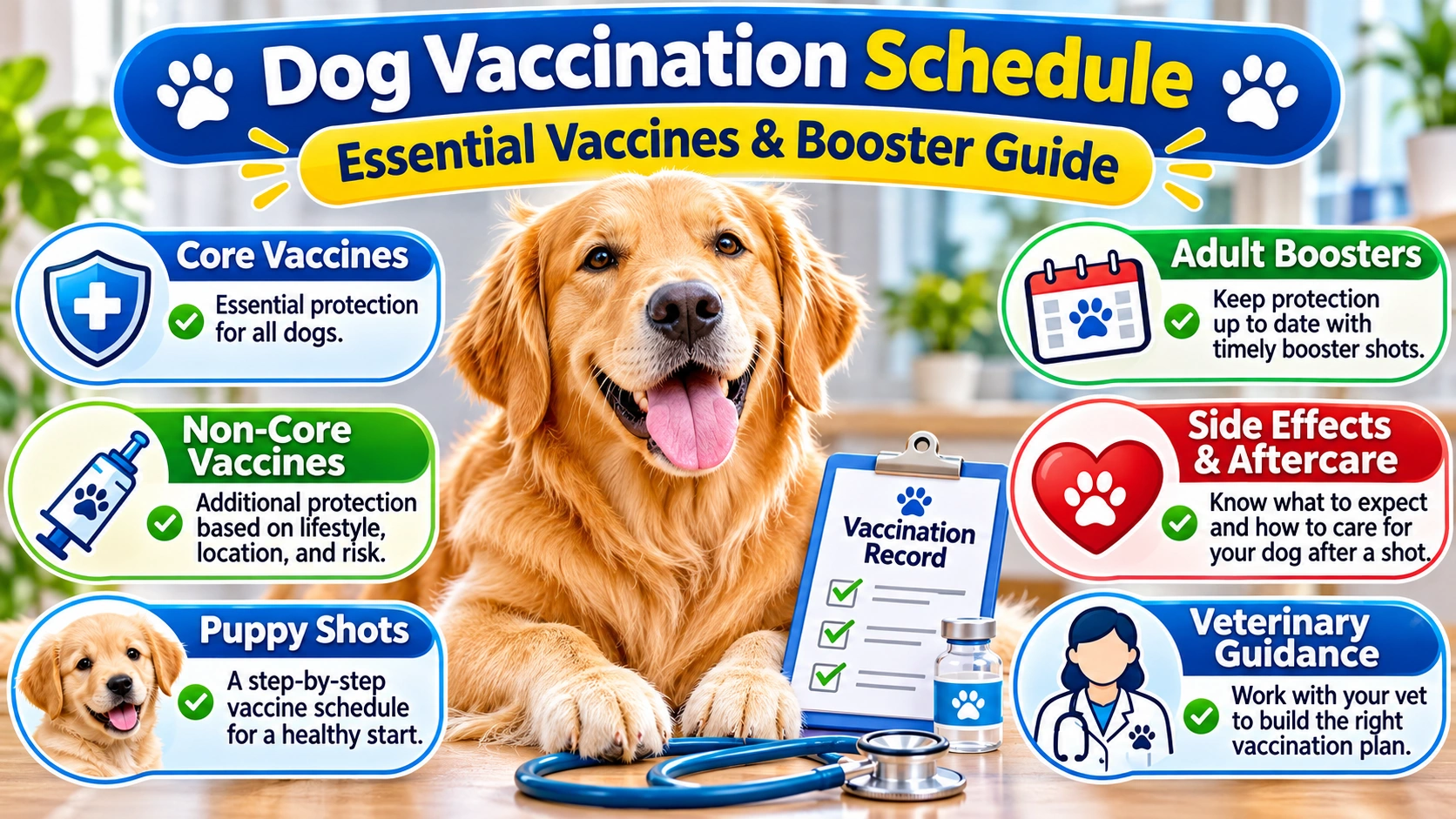
Essential Dog Vaccine Schedule: What Every Owner Needs
Vaccination is one of the most important parts of responsible dog ownership. Vaccines help protect dogs against serious infectious diseases and reduce the risk of certain illnesses spreading between animals. Whether you have a young puppy or an adult dog, understanding the dog vaccination schedule can help you make informed decisions about your pet’s preventive healthcare.
However, not every dog needs exactly the same vaccines or vaccination dates. A suitable plan depends on your dog’s age, health, previous vaccination history, lifestyle, geographic location, and exposure to infectious diseases. Your veterinarian can recommend the right vaccines and booster intervals for your individual dog.
This guide explains puppy vaccinations, adult dog boosters, core and non-core vaccines, possible side effects, and how to maintain accurate vaccination records.
Why Are Vaccines Important For Dogs?
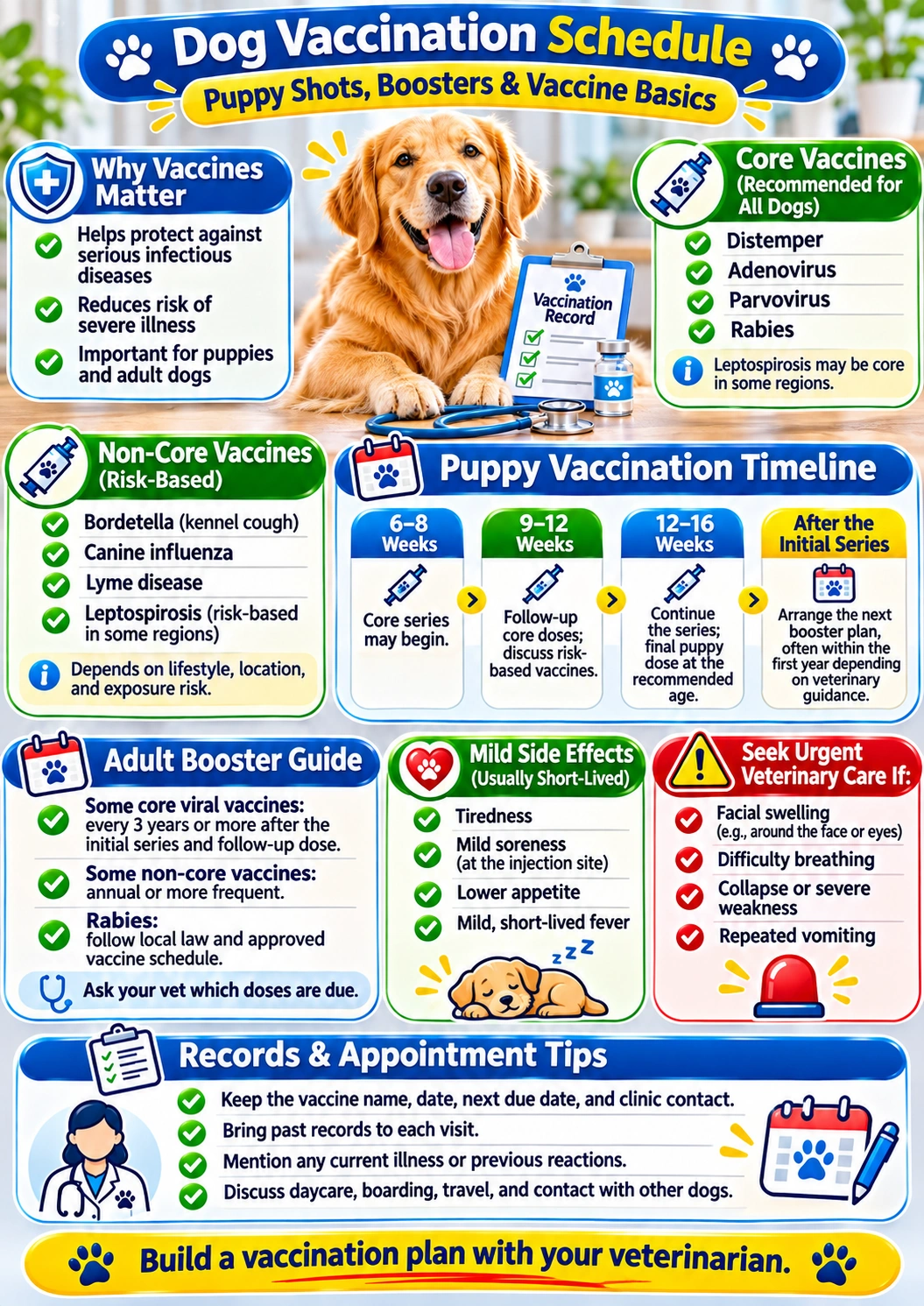
Vaccines help prepare a dog’s immune system to recognize specific infectious diseases. Depending on the vaccine and the disease, vaccination can reduce the likelihood of infection, prevent severe illness, or lower the risk of complications.
Dogs can encounter infectious diseases in many everyday situations, including:
- Walking in public places and shared outdoor areas.
- Meeting unfamiliar dogs.
- Visiting dog parks, daycare facilities, or boarding kennels.
- Attending training classes or grooming appointments.
- Contact with contaminated environments.
Some infectious diseases can spread without direct contact with an infected dog. Canine parvovirus, for example, can persist in contaminated environments and presents a particular concern for unvaccinated puppies.
Vaccination is therefore an important part of a broader preventive healthcare routine. For more information about everyday nutrition, grooming, exercise, and general wellness, read our complete dog care guide for beginners.
Core Vs. Non_Core Vaccines For Dogs
Veterinary organizations generally classify dog vaccines as core or non-core. This classification helps veterinarians decide which vaccines are broadly recommended and which should be selected according to a dog’s individual exposure risks.
What Are Core Vaccines?
Core vaccines protect against diseases considered important risks for dogs in a particular region. Major international vaccination guidelines identify protection against canine distemper virus, canine adenovirus, and canine parvovirus as core vaccination priorities.
Rabies vaccination is also essential wherever the disease is present or where local regulations require it. Its legal requirements and booster intervals vary by country and jurisdiction.
Common core vaccine protections include:
- Canine distemper: Helps protect against a serious viral disease that can affect the respiratory, gastrointestinal, and nervous systems.
- Canine adenovirus: Helps protect against infectious canine hepatitis and other disease associated with canine adenovirus.
- Canine parvovirus: Helps protect against a highly contagious viral disease that can cause severe gastrointestinal illness, particularly in puppies.
- Rabies: Protects against rabies, a serious viral disease affecting mammals, including humans. Vaccination requirements depend on local laws and veterinary guidance.
Important regional difference: Leptospirosis is considered a core vaccine in some regions, including areas where exposure risk is widespread, while other guidelines classify it according to regional disease prevalence and individual risk. Your veterinarian can explain how it is classified locally.
What Are Non_Core Vaccines?
Non-core vaccines are selected according to a dog’s lifestyle, geographic location, and likelihood of exposure to particular infectious diseases. They are not automatically required for every dog.
Examples include:
- Bordetella bronchiseptica: Helps protect against one bacterial cause of infectious canine respiratory disease, commonly associated with kennel cough.
- Canine influenza: May be recommended for dogs exposed to other dogs in areas where canine influenza is circulating.
- Lyme disease: May be considered for dogs exposed to infected ticks in areas where Lyme disease is a concern.
- Leptospirosis: May be recommended according to regional guidelines and exposure risk, and is considered core in some regions.
Dogs that regularly attend daycare, boarding facilities, group training, or dog shows may have different vaccination needs from dogs with limited contact with other animals.
Your veterinarian should assess these risks before recommending additional vaccines.
Puppy Vaccination Schedule: When Do Puppies Need Their First Shots?
Puppies need a carefully planned vaccination series during their first months of life. One reason is that maternal antibodies received from the mother can temporarily interfere with a puppy’s immune response to vaccination.
These antibodies gradually decrease, but the timing varies between puppies. Repeated vaccine doses help ensure that a puppy has an opportunity to develop protection as maternal antibody levels decline.
Major veterinary guidelines commonly recommend beginning the core puppy vaccination series at approximately six to eight weeks of age. Doses are then repeated at recommended intervals until the puppy is at least 16 weeks old. Puppies with particular exposure risks may need additional doses according to veterinary advice.
General Puppy Vaccination Timeline
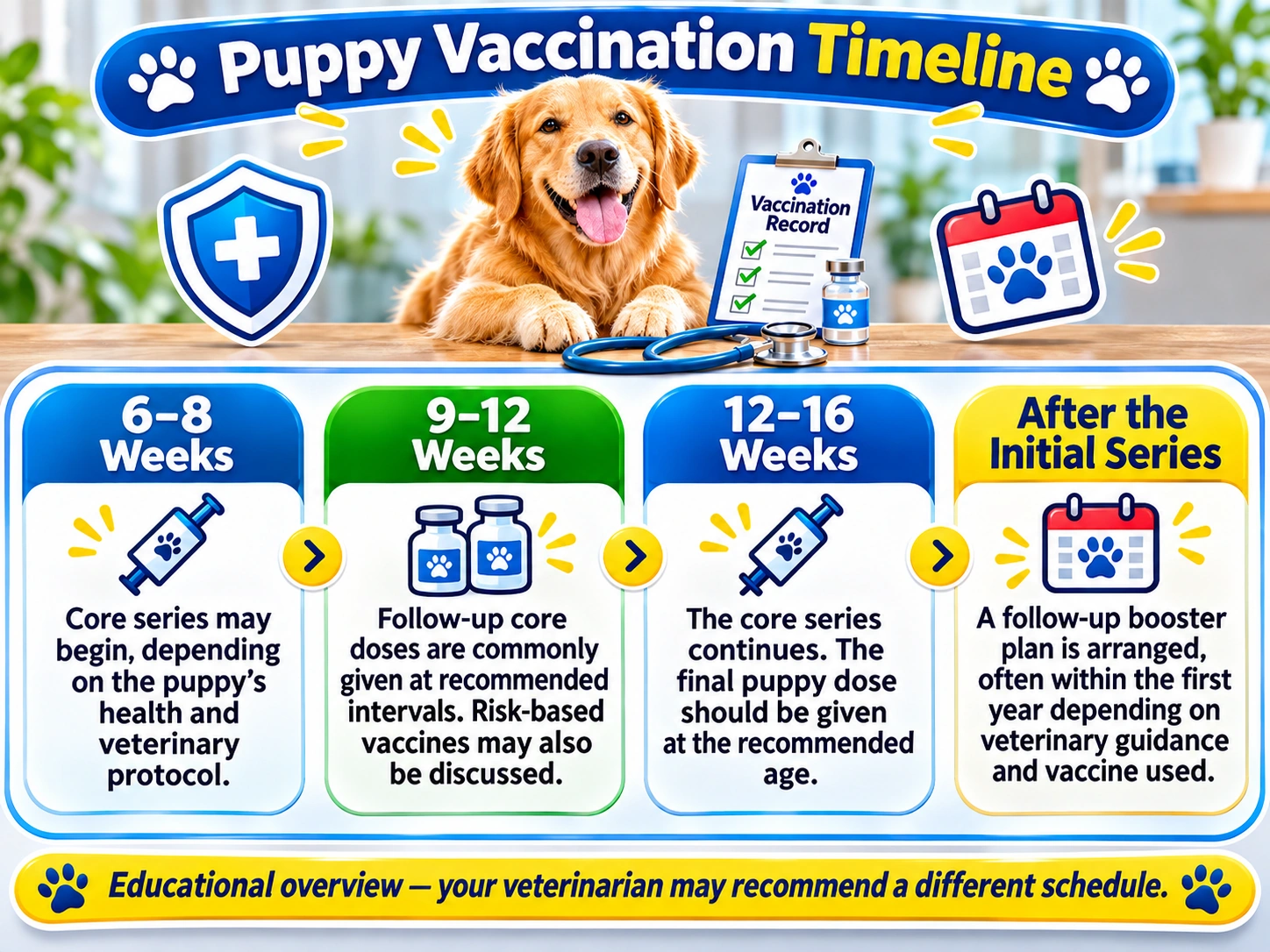
The following table is an educational overview of common vaccination stages. It is not a universal schedule or a substitute for your veterinarian’s instructions.
| Approximate Age | Vaccination Stage |
|---|---|
| 6–8 weeks | The core puppy vaccination series may begin, depending on the puppy’s health and veterinary protocol. |
| 9–12 weeks | Follow-up core vaccine doses are commonly administered at recommended intervals. Additional risk-based vaccines may also be discussed. |
| 12–16 weeks | The core series continues. The final puppy dose should be administered at or after the minimum age recommended by the applicable guideline and vaccine instructions. |
| After the initial series | A follow-up vaccination plan is arranged. The timing may include a booster around six months or within the first year, depending on the guideline and vaccine used. |
The exact schedule can vary according to the vaccine product, the puppy’s starting age, local disease risks, and veterinary recommendations. Rabies vaccination must follow local legal requirements and approved vaccine instructions.
Why Do Puppies Need Multiple Vaccine Doses?
Multiple puppy vaccine doses help address differences in maternal antibody levels. If maternal antibodies are still present at the time of an early vaccination, they may reduce the puppy’s immune response to that dose.
Because veterinarians cannot reliably predict exactly when maternal antibodies will decrease enough in every puppy, the initial series uses repeated doses at recommended intervals.
Completing the series is important. Do not assume that one early injection provides the same protection as a completed vaccination plan.
Adult Dog Vaccination Schedule
Adult dogs also need a vaccination plan, even after completing their puppy vaccinations. Their booster requirements depend on the vaccines they previously received, their health, and their ongoing exposure risks.
For certain core vaccines, veterinary guidelines recommend a booster after the initial puppy series, followed by later boosters at intervals of three years or more, depending on the vaccine and applicable guidance.
Other vaccines may require more frequent boosters. Some respiratory and lifestyle-based vaccines, for example, may have annual or more frequent schedules depending on the product and exposure risk.
Rabies boosters must follow local regulations and the approved duration of immunity of the vaccine used.
Do Indoor Dogs Still Need Vaccines?
Yes. Living mainly indoors does not automatically eliminate a dog’s need for core vaccinations.
Indoor dogs may still encounter infectious organisms during veterinary visits, grooming appointments, walks, boarding, or contact with other animals. Some diseases can also spread through contaminated environments.
However, an indoor dog’s need for additional non-core vaccines may differ from that of a dog that frequently attends daycare or spends time in areas with particular disease risks.
Discuss your dog’s daily routine with your veterinarian so the vaccination plan reflects its actual lifestyle.
Common Dog Vaccines And The Diseases They Help Prevent
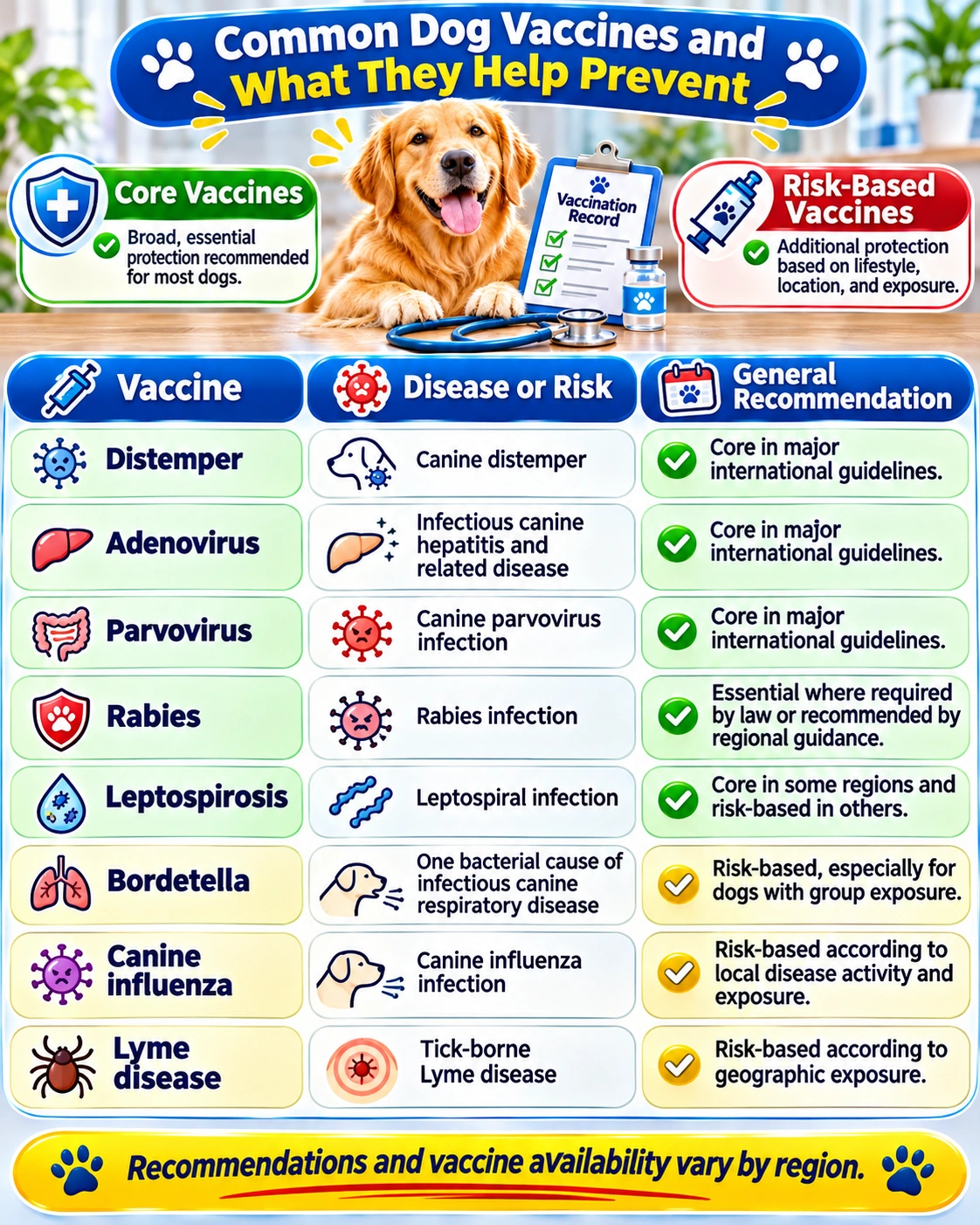
The table below summarizes several vaccines commonly discussed during veterinary appointments. Recommendations and vaccine availability differ by region.
| Vaccine | Disease or Risk | General Recommendation |
|---|---|---|
| Distemper | Canine distemper | Core in major international guidelines. |
| Adenovirus | Infectious canine hepatitis and related disease | Core in major international guidelines. |
| Parvovirus | Canine parvovirus infection | Core in major international guidelines. |
| Rabies | Rabies infection | Essential where required by law or recommended by regional guidance. |
| Leptospirosis | Leptospiral infection | Core in some regions and risk-based in others. |
| Bordetella | One bacterial cause of infectious canine respiratory disease | Risk-based, particularly for dogs with group exposure. |
| Canine influenza | Canine influenza infection | Risk-based according to local disease activity and exposure. |
| Lyme disease | Tick-borne Lyme disease | Risk-based according to geographic exposure. |
Some combination vaccines protect against several diseases in one injection. Your veterinarian can explain which components are included and whether the selected product is appropriate for your dog.
How Often Do Dogs Need Vaccine Boosters?
A booster is an additional vaccine dose given after an initial vaccination series. Its purpose is to maintain or restore protection according to the vaccine’s expected duration of immunity and recommended schedule.
Booster intervals are not identical for all vaccines:
- Some core viral vaccines may have booster intervals of three years or more after the initial series and recommended follow-up dose.
- Some non-core vaccines may require annual or more frequent boosters.
- Leptospirosis vaccination commonly requires more frequent revaccination than certain core viral vaccines.
- Rabies booster timing depends on the vaccine product and applicable local law.
Do not assume that every vaccine must be repeated annually. Equally, do not skip a booster because your dog appears healthy.
Ask your veterinarian to review your dog’s vaccination history and identify which doses are due.
What If Your Dog Missed A Vaccine?
If your dog missed a scheduled vaccination, contact your veterinarian for advice. A missed appointment does not automatically mean that the entire vaccination process must start again.
The appropriate next step depends on:
- Which vaccine was missed.
- How long it has been since the previous dose.
- Your dog’s age and medical history.
- The vaccine manufacturer’s instructions.
- Local vaccination recommendations and legal requirements.
Provide your veterinarian with any available vaccination records. The veterinarian can determine whether your dog needs a booster, a new initial series, or another approach.
If you adopted an adult dog with an unknown vaccination history, arrange a veterinary examination rather than guessing which vaccines were previously administered.
Can Dogs Have Side Effects After Vaccination?
Most dogs tolerate vaccination well. However, mild temporary reactions can occur as the immune system responds.
Possible mild reactions include:
- Temporary tiredness.
- Mild soreness around the injection site.
- A slight decrease in appetite.
- A mild, short-lived fever.
These reactions are generally temporary. Contact your veterinarian if symptoms persist, worsen, or cause concern.
When Should You Seek Urgent Veterinary Attention?
Serious allergic reactions are uncommon but can require urgent veterinary care. Warning signs may include:
- Facial swelling.
- Difficulty breathing.
- Collapse or severe weakness.
- Repeated vomiting shortly after vaccination.
If you notice these signs after vaccination, seek urgent veterinary attention. Tell your veterinarian about previous vaccine reactions, existing health conditions, and medications before future vaccinations.
How To Keep Your Dog’s Vaccination Records Organized
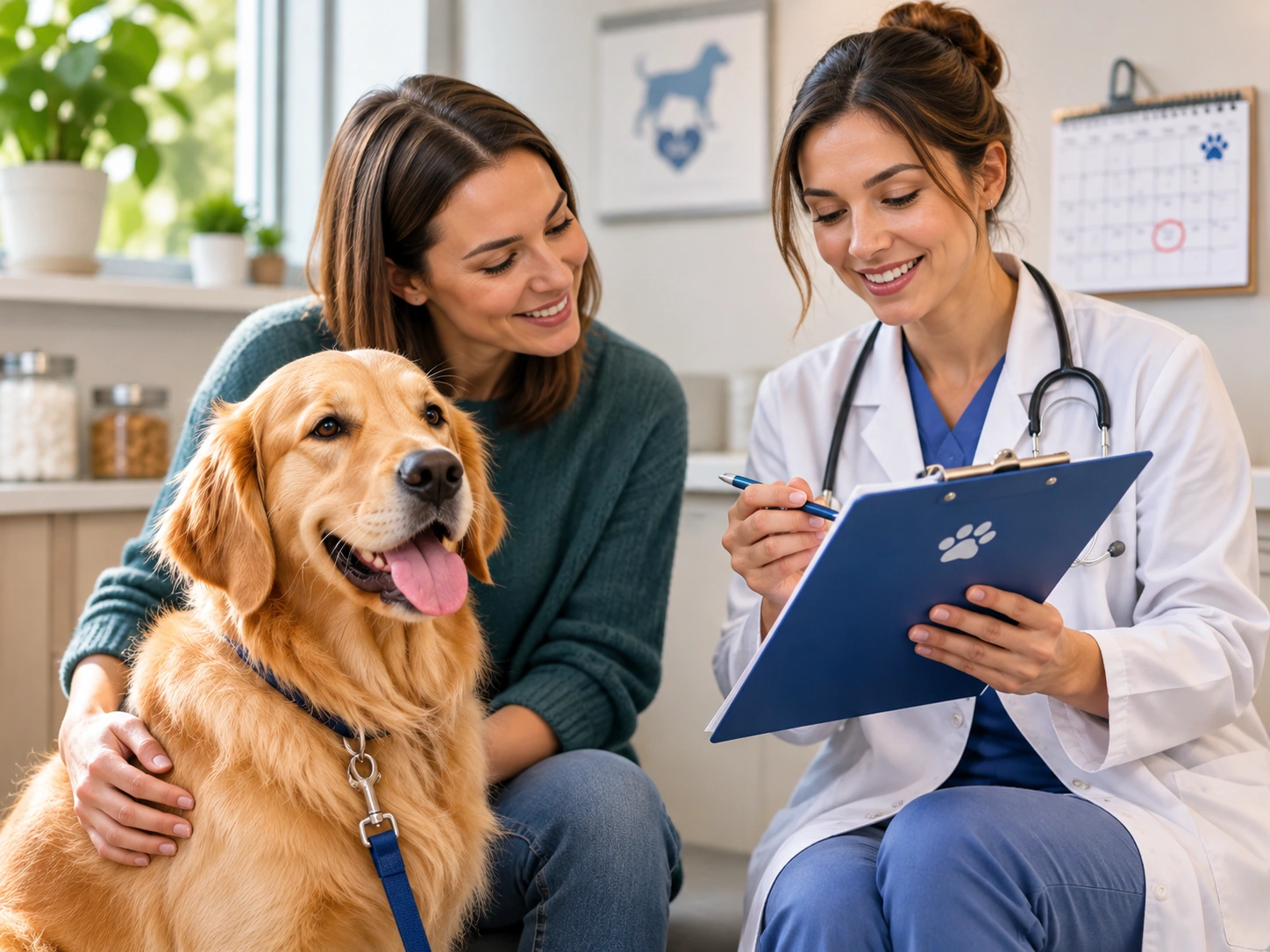
Accurate vaccination records make it easier to track boosters, arrange boarding, and provide important medical information when visiting a new veterinary clinic.
Your dog’s vaccination record should include:
- The name of each vaccine administered.
- The date of vaccination.
- The manufacturer’s name and product details, when available.
- The vaccine lot or batch number, when recorded.
- The date of the next recommended dose.
- The veterinary clinic’s contact information.
Keep a digital copy as well as the original veterinary record. If you move or travel, ask whether local regulations or regional disease risks affect your dog’s vaccination plan.
How To Prepare Your Dog For A Vaccination Appointment
A little preparation can make a veterinary visit more comfortable and help your veterinarian make informed decisions.
- Bring your dog’s previous vaccination records.
- Tell the veterinarian about recent illness or unusual behavior.
- Share information about daycare, boarding, travel, and contact with other dogs.
- Mention any previous reactions to vaccines or medications.
- Ask which vaccines are essential and which depend on lifestyle risks.
- Confirm the next recommended booster dates before leaving the clinic.
If your dog seems unwell on the day of the appointment, contact the clinic before the visit. The veterinarian can decide whether vaccination should proceed or be rescheduled.
Frequently Asked Questions About Dog Vaccination
At what age should puppies get their first vaccines?
Puppies commonly begin their core vaccination series at approximately six to eight weeks of age, depending on the vaccine and veterinary protocol. The series continues at recommended intervals until at least 16 weeks of age. Your veterinarian will determine the appropriate starting point and schedule.
How many vaccines does a puppy need?
The number of doses depends on the puppy’s starting age, vaccine product, and individual risk. Core vaccinations are generally repeated every few weeks during early puppyhood until the puppy reaches the recommended final vaccination age. Additional risk-based vaccines may be recommended.
Do adult dogs need vaccinations every year?
Not necessarily. Some core vaccines have booster intervals of three years or more after the initial series and follow-up dose, while other vaccines may need annual boosters. Your veterinarian should follow the vaccine product instructions and applicable regional guidance.
Are dog vaccinations necessary for indoor dogs?
Yes. Indoor dogs may still be exposed to infectious diseases during walks, veterinary visits, grooming, boarding, or contact with other animals. Core vaccine recommendations generally still apply to dogs that live indoors.
What should I do if I do not know my dog’s vaccination history?
Arrange a veterinary appointment and explain that the vaccination history is unknown. Bring any documents you can find. The veterinarian can assess your dog and create an appropriate vaccination plan.
Can my puppy go outside before completing all vaccinations?
Outdoor activity should be planned according to your puppy’s vaccination status and local disease risks. Avoid exposing an incompletely vaccinated puppy to high-risk environments. Ask your veterinarian how to balance safe socialization with infection prevention in your area.
Are core and non-core vaccines the same in every country?
No. Disease prevalence, local regulations, available vaccines, and regional veterinary guidelines can affect vaccine classification. For example, leptospirosis vaccination may be considered core in some regions and risk-based in others.
Final Thoughts: Build A Vaccination Plan With Your Veterinarian
Following an appropriate dog vaccination schedule is an important part of protecting your pet throughout life. Puppies need a carefully planned initial series, while adult dogs need boosters based on the vaccines they have received and their ongoing exposure risks.
Remember that core and non-core vaccine recommendations can differ by region. Your dog’s age, health, lifestyle, travel plans, and vaccination history should all be considered before deciding which vaccines are appropriate.
Work with your veterinarian to maintain an accurate vaccination record and review your dog’s protection regularly. A personalized plan is the best way to make sure your dog receives appropriate preventive care.
Veterinary References
- American Animal Hospital Association (AAHA): Canine Vaccination Guidelines.
- AAHA: Recommendations for Core and Non-Core Canine Vaccines.
- World Small Animal Veterinary Association (WSAVA): Vaccination Guidelines.
- WSAVA: 2024 Guidelines for the Vaccination of Dogs and Cats (PDF).
Disclaimer: This article is for general educational purposes only. It does not replace veterinary examination, diagnosis, or individualized vaccination advice. Always consult a qualified veterinarian about your dog’s vaccination needs.