Table of Contents
- Dry Food Vs Wet Food For Dogs: Which Is Better?
- What Is Dry Dog Food?
- What Is Wet Dog Food?
- Dry Food Vs Wet Food For Dogs: Key Differences
- Benefits Of Dry Dog Food
- Disadvantages Of Dry Dog Food
- Benefits Of Wet Dog Food
- Disadvantages Of Wet Dog Food
- Is Wet Food Or Dry Food Better For Puppies?
- Can You Mix Wet And Dry Dog Food?
- How To Choose The Right Food For Your Dog
- Common Mistakes Dog Owners Should Avoid
- Frequently Asked Questions About Dry And Wet Dog Food
- Final Thoughts: Choosing Between Dry And Wet Dog Food
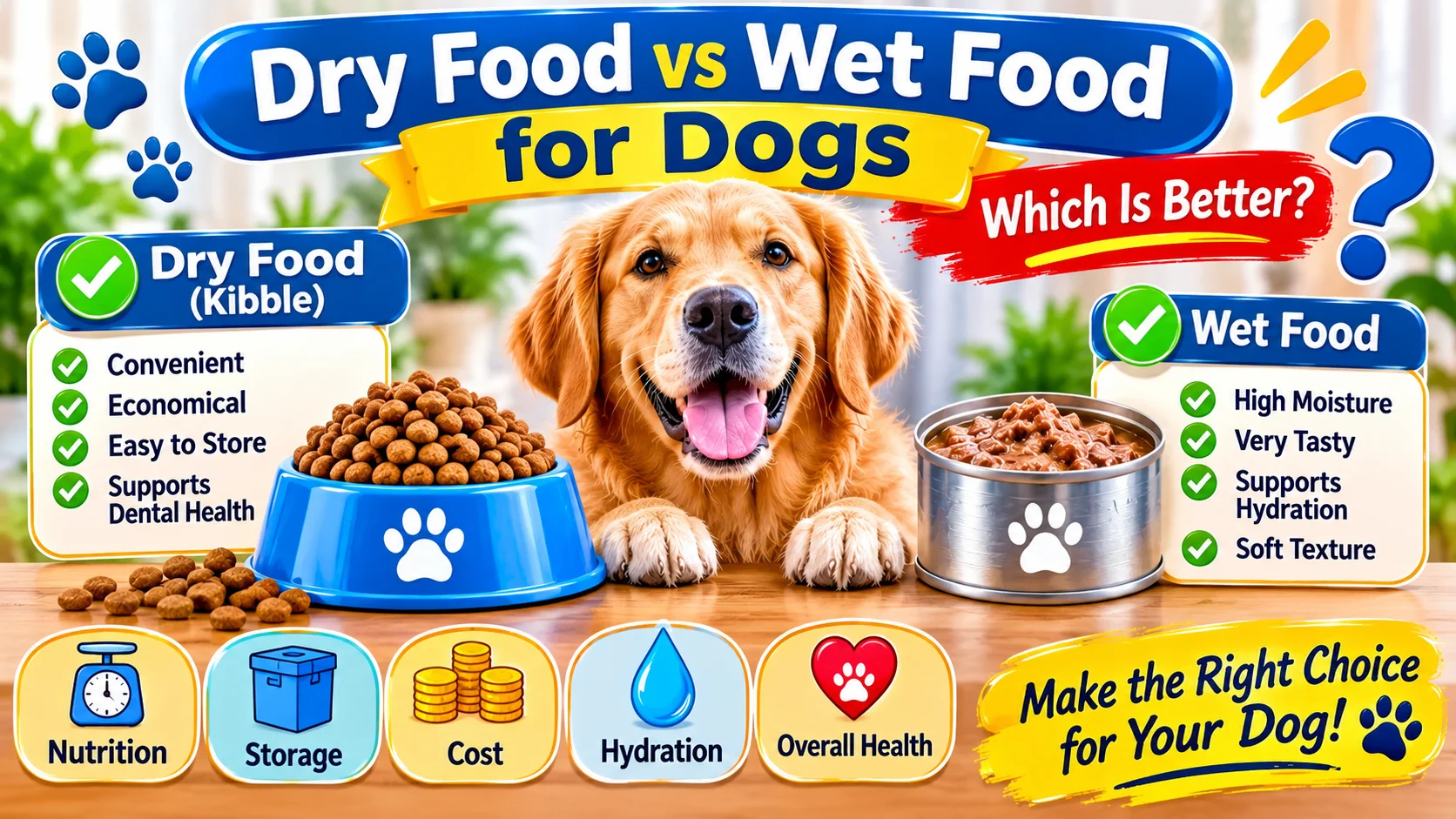
Dry Food Vs Wet Food For Dogs: Which Is Better?
Choosing the right food is one of the most important responsibilities of dog ownership. With so many products available, many owners eventually face the same question: should they feed their dogs dry food or wet food?
Both options can provide the nutrients dogs need when they are properly formulated and fed in suitable portions. However, they differ in moisture content, texture, storage requirements, convenience, and cost. These differences can influence which option works best for an individual dog.
In this guide, we will compare dry food vs wet food for dogs, explain the advantages and disadvantages of each, and help you make a more informed decision based on your dog’s age, health, preferences, and daily needs.
What Is Dry Dog Food?
Dry dog food, commonly called kibble, is a type of commercially prepared dog food produced with relatively low moisture content. It usually comes in small, bite-sized pieces that are easy to measure, store, and serve.
Most dry dog foods are manufactured by combining ingredients such as animal proteins, grains or other carbohydrate sources, fats, vitamins, and minerals. The mixture is processed into kibble and then dried to reduce moisture.
A complete and balanced dry food can provide the essential nutrients a dog needs for everyday health. However, nutritional quality varies between products, so it is important to evaluate the formulation rather than choosing food based only on its appearance or price.
What Is Wet Dog Food?
Wet dog food is commercially prepared food with a much higher moisture content than dry kibble. It is commonly sold in cans, trays, pouches, and other sealed containers.
Its texture can range from smooth pâté to chunks of meat in gravy or jelly. Many dogs find wet food appealing because of its softer texture, stronger aroma, and moisture content.
Like dry food, wet food can provide complete nutrition when its label identifies it as a complete and balanced diet for the appropriate life stage.
Not every canned or packaged dog food is intended to serve as a complete meal. Some products are designed only as treats, toppers, or supplemental foods, so checking the packaging is essential.
Dry Food Vs Wet Food For Dogs: Key Differences
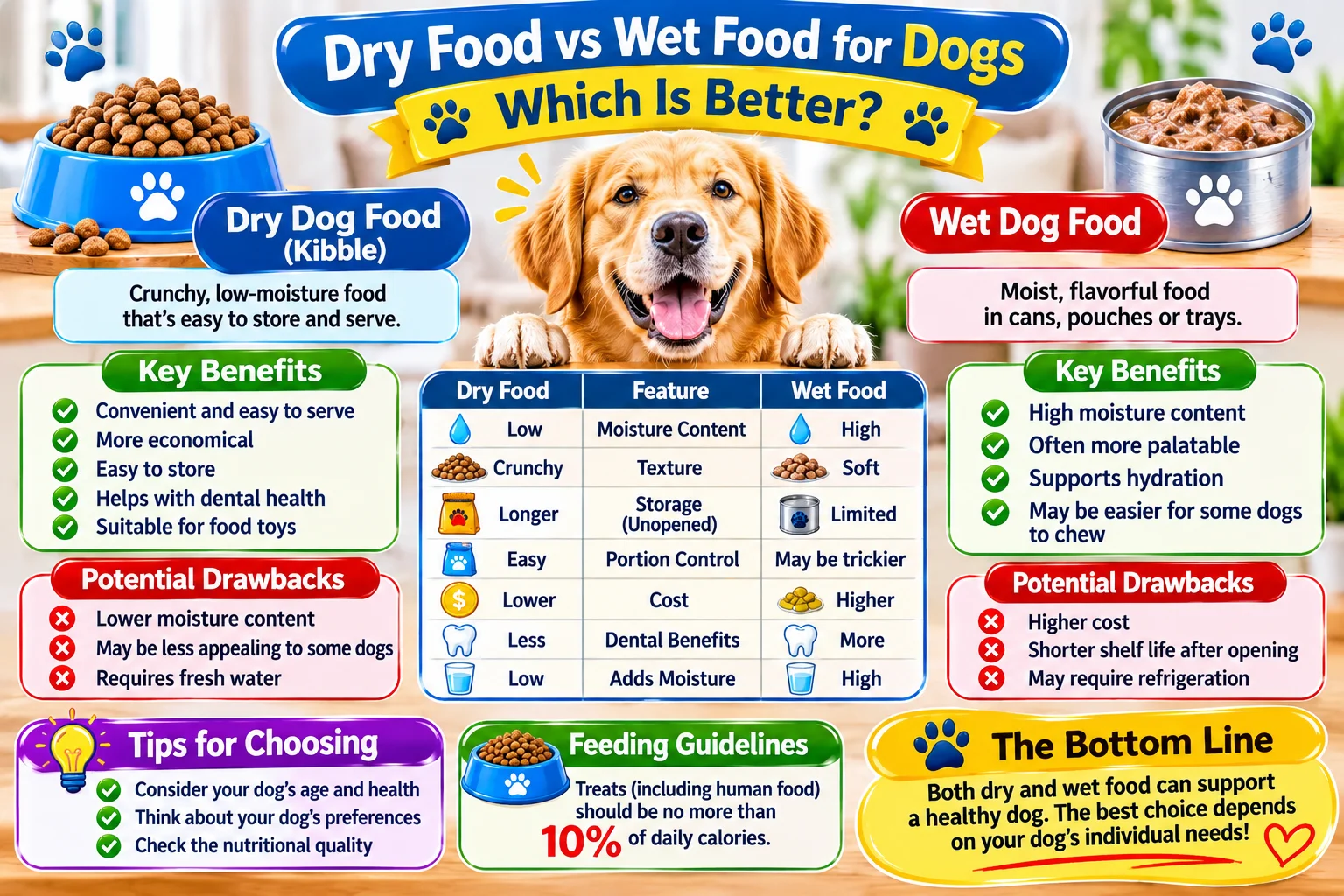
Although both types can support a healthy diet, they have several practical differences.
| Feature | Dry Dog Food | Wet Dog Food |
|---|---|---|
| Moisture content | Low | High |
| Texture | Firm and crunchy | Soft and moist |
| Storage before opening | Usually easy to store in a sealed bag or container | Usually requires sealed packaging |
| Storage after opening | Keep sealed and follow manufacturer instructions | Usually requires refrigeration according to label instructions |
| Portion measurement | Often easy to measure | May require more careful portioning |
| Cost per serving | Often lower | Often higher |
| Aroma | Usually less noticeable | Often stronger |
| Convenience | Easy to serve and transport | Requires more attention after opening |
| Water intake | Provides little dietary moisture | Contributes more moisture to the diet |
These are general differences, and individual products may vary. Neither format is automatically healthier than the other. The nutritional adequacy of the specific food matters more than whether it comes in a bag or a can.
Benefits Of Dry Dog Food
Dry food is a popular choice for many dog owners because it is practical, widely available, and easy to serve.
1. Convenient For Everyday Feeding
Kibble is simple to measure and serve. Owners can usually prepare meals quickly without opening cans or handling large amounts of moist food.
Its convenience can also make it useful for households with regular feeding schedules.
2. Generally More Economical
Dry food often costs less per serving than wet food, although prices depend on the brand, ingredients, product quality, and feeding requirements.
Because kibble contains less moisture, a smaller quantity by weight may provide a similar amount of calories to a larger quantity of wet food.
When comparing prices, consider the cost per day rather than looking only at the price of the package.
3. Easier To Store
Unopened dry food is generally easy to store in a cool, dry place. Once opened, it should be kept in its original packaging or a suitable airtight container, following the manufacturer’s storage recommendations.
Proper storage helps protect the food from moisture, pests, and contamination.
4. Useful For Food_Dispensing Toys
Some dry kibble can be used in suitable puzzle feeders and food-dispensing toys. These products can encourage dogs to work for their food and provide an additional form of mental enrichment.
However, the kibble should be appropriate for the toy, and the calories used for enrichment should be included in the dog’s daily food allowance.
5. Easy To Measure
Dry food is often convenient for portion control because it can be measured using a kitchen scale or an appropriate measuring tool.
Accurate portions matter because feeding too much can contribute to unwanted weight gain over time.
Disadvantages Of Dry Dog Food
Despite its convenience, dry food may not be ideal for every dog.
1. Contains Less Moisture
Kibble has a much lower moisture content than wet food. Dogs eating primarily dry food need access to fresh, clean drinking water throughout the day.
This difference may be especially relevant for dogs that do not drink enough water or have health conditions affecting hydration. Owners should discuss suitable feeding options with a veterinarian when such concerns exist.
2. May Be Difficult For Some Dogs To Chew
Some dogs may have difficulty chewing hard kibble because of dental disease, missing teeth, oral discomfort, or age-related changes.
If your dog suddenly struggles to eat dry food, arrange a veterinary examination rather than assuming that the food texture is the only problem.
3. Not Automatically Better For Dental Health
Dry kibble is sometimes promoted as a way to clean teeth, but ordinary kibble does not reliably prevent dental disease.
Some specially designed dental diets have evidence supporting their dental benefits. However, regular dry food should not replace toothbrushing or professional dental care.
4. Some Dogs May Find It Less Appealing
Dogs have individual preferences. Some may prefer the smell and texture of wet food and show less interest in dry kibble.
If a dog suddenly refuses food, especially when accompanied by other changes in behavior or health, a veterinarian should assess the situation.
Benefits Of Wet Dog Food
Wet food offers several features that may make it a suitable option for particular dogs.
1. Higher Moisture Content
One of the main advantages of wet food is its high water content. It contributes additional moisture to a dog’s daily diet.
This can be useful for dogs that prefer moist meals or need encouragement to consume more water. However, wet food does not replace access to fresh drinking water.
2. Soft Texture
Wet food is generally easier to chew than dry kibble because it is softer and contains more moisture.
This may make it a practical option for some dogs with dental discomfort or difficulty chewing. Persistent chewing problems should still be evaluated by a veterinarian.
3. Stronger Aroma And Appealing Texture
Many wet foods have a stronger smell and softer texture than kibble. Some dogs find these characteristics more appealing.
Wet food may therefore be helpful for dogs that are selective about their meals, although a sudden loss of appetite should not be treated simply by changing food.
4. Variety Of Textures And Recipes
Wet food is available in different textures and formulations, including pâté, chunks, stews, and gravy-style recipes.
This variety can make it easier to find a product that suits a dog’s preferences, provided the chosen food meets its nutritional requirements.
5. Can Be Useful As A Meal Or Topper
Depending on the product, wet food can serve as a complete meal or as a small addition to dry food.
Always check whether the packaging identifies the product as complete and balanced or intended only for supplemental feeding.
Disadvantages Of Wet Dog Food
Wet food also has practical limitations that owners should consider.
1. Usually More Expensive
Wet food often costs more per calorie than dry kibble. Dogs that need larger daily portions may therefore require a higher food budget.
Comparing the daily feeding cost of different products is more useful than comparing package prices alone.
2. Requires Careful Storage After Opening
Once opened, wet food generally needs to be covered, refrigerated, and used within the period stated by the manufacturer.
Leaving moist food at room temperature for extended periods can increase the risk of spoilage and bacterial growth.
Follow the product’s storage instructions and discard food that has been left out beyond the recommended time.
3. Can Be Less Convenient
Opening cans or pouches, storing leftovers, and cleaning food bowls may require more effort than serving dry kibble.
This may be less convenient for owners who travel frequently or need a simple feeding routine.
4. May Be Easier To Overlook In Portion Calculations
Wet food contains a large amount of water, so its weight can be misleading when comparing it with kibble.
Always compare calorie information and feeding recommendations rather than assuming that equal weights of wet and dry food provide the same energy.
Is Wet Food Or Dry Food Better For Puppies?
Puppies have different nutritional requirements from adult dogs because they are growing and developing.
The most important consideration is choosing a food specifically formulated to support growth. It should provide appropriate levels of energy, protein, fats, vitamins, and minerals for the puppy’s developmental stage.
Both wet and dry puppy foods can be suitable when they are complete and balanced for growth.
When choosing food for a puppy, consider:
- Life-stage suitability: Check that the label identifies the food as appropriate for growth or for all life stages.
- Breed size: Puppies expected to become large dogs may need a diet specifically formulated for large-breed growth.
- Feeding portions: Follow the manufacturer’s guidance and your veterinarian’s recommendations.
- Eating ability: Choose a texture your puppy can comfortably eat.
- Growth monitoring: Regular veterinary checkups help assess development and nutritional needs.
Avoid switching between foods frequently without a clear reason. If a change is needed, introduce the new food gradually unless your veterinarian advises otherwise.
Can You Mix Wet And Dry Dog Food?
Yes. Many dogs can eat a combination of wet and dry food when both products are nutritionally appropriate and the total daily calories are controlled.
This approach is sometimes called mixed feeding. It allows owners to combine the convenience of kibble with the moisture and texture of wet food.
However, mixing foods requires careful portion planning.
How To Mix Wet And Dry Dog Food Properly
- Choose suitable products: Make sure both foods are appropriate for your dog’s life stage and nutritional needs.
- Check calorie information: Compare the calories per serving or per gram for each product.
- Adjust the portions: Reduce the amount of each food so the combined meal does not exceed your dog’s daily calorie requirement.
- Introduce the combination gradually: A gradual transition may help reduce digestive upset.
- Monitor your dog: Pay attention to appetite, stool consistency, body condition, and overall tolerance.
Do not simply add wet food on top of a full portion of kibble. Doing so may unintentionally increase your dog’s calorie intake.
If your dog follows a prescription diet or has a medical condition, ask your veterinarian before mixing different foods.
How To Choose The Right Food For Your Dog
There is no single food format that suits every dog. A good choice should support your dog’s nutritional needs while fitting its health requirements and your daily routine.
1. Your Dog’s Age And Life Stage
Puppies, adult dogs, and senior dogs can have different nutritional requirements.
Choose food formulated for the correct life stage rather than relying only on whether it is wet or dry.
2. Your Dog’s Health
Some dogs have health conditions that affect their dietary requirements. These may include kidney disease, diabetes, digestive disorders, food allergies, or dental problems.
A veterinarian can help identify an appropriate diet when a medical condition is involved.
3. Nutritional Completeness
Check the packaging to determine whether the food is labeled as complete and balanced for your dog’s life stage.
A food labeled for supplemental or intermittent feeding should not be used as the sole source of nutrition unless a veterinary professional has provided specific guidance.
4. Calorie Content And Portion Size
Different foods contain different amounts of calories. Feeding recommendations should be adjusted according to your dog’s size, activity level, body condition, and individual needs.
Use the package guidelines as a starting point, then discuss adjustments with your veterinarian.
5. Your Dog’s Preferences
Some dogs prefer crunchy kibble, while others enjoy moist food. Your dog’s willingness to eat the food is important, provided the product is nutritionally suitable.
6. Your Budget And Daily Routine
Consider how much the food costs per day, how easily it can be stored, and whether it fits your feeding schedule.
The best practical choice is one that provides appropriate nutrition and can be maintained consistently.
For more help understanding ingredients, labels, and nutritional choices, read our guide on how to choose dog food.
You can also explore our Ultimate Dog Care Guide for Beginners for broader advice on feeding, health, grooming, and everyday dog care.
Common Mistakes Dog Owners Should Avoid
Even when owners choose a good-quality product, certain feeding mistakes can affect a dog’s health.
1. Choosing Food Based Only On Price
A low price does not automatically mean poor quality, just as an expensive product is not automatically the best choice.
Evaluate nutritional adequacy, suitability for your dog’s life stage, and the manufacturer’s feeding guidance.
2. Ignoring The Feeding Instructions
Overfeeding can contribute to weight gain, while feeding too little may prevent a dog from receiving enough energy and nutrients.
Measure portions carefully and review them as your dog’s needs change.
3. Switching Food Too Quickly
Sudden dietary changes may cause digestive upset in some dogs.
Unless a veterinarian recommends an immediate change, transition gradually by mixing increasing amounts of the new food with the previous food over several days.
4. Assuming Dry Food Cleans Teeth
Ordinary kibble is not a substitute for dental care. Regular toothbrushing and veterinary dental examinations remain important.
5. Leaving Wet Food Out Too Long
Wet food should not be left at room temperature indefinitely. Follow the product’s instructions for serving, refrigeration, and disposal.
6. Ignoring Changes In Appetite
A sudden change in eating habits may indicate dental discomfort, illness, stress, or another problem.
If your dog stops eating, repeatedly refuses meals, or develops other concerning symptoms, contact your veterinarian.
Frequently Asked Questions About Dry And Wet Dog Food
Is dry dog food healthier than wet dog food?
Not necessarily. Both can provide complete nutrition when properly formulated. The best option depends on the dog’s individual needs, the food’s nutritional quality, and whether it is appropriate for the dog’s life stage.
Can dogs eat wet and dry food every day?
Yes, many dogs can eat a combination of wet and dry food every day. The products should be nutritionally appropriate, and their combined portions must meet the dog’s calorie requirements without overfeeding.
Does wet dog food help with hydration?
Wet food contains more moisture than dry kibble and can contribute to daily water intake. However, dogs should always have access to fresh, clean drinking water.
Is dry food better for a dog’s teeth?
Ordinary dry kibble does not reliably prevent dental disease. Some specially formulated dental diets may help reduce plaque or tartar, but they should be used according to veterinary advice and do not replace regular dental care.
Which food is better for senior dogs?
There is no universal answer. Some senior dogs may prefer soft food because of dental problems, while others do well with dry food. Nutritional requirements and existing health conditions should guide the decision.
Can I switch my dog from dry food to wet food?
Yes, many dogs can switch between food formats, provided the new diet is suitable and nutritionally complete. Introduce changes gradually when possible and monitor your dog’s digestion and appetite.
How do I know if my dog’s food is complete and balanced?
Read the nutritional adequacy statement on the packaging. It should identify the life stage for which the food is formulated and indicate whether it is intended to provide complete and balanced nutrition. Ask your veterinarian if you are unsure how to interpret the label.
Final Thoughts: Choosing Between Dry And Wet Dog Food
When comparing dry food vs wet food for dogs, there is no universal winner. Both formats can support good health when they provide complete and balanced nutrition and are appropriate for the individual dog.
Dry food is often convenient, easy to store, and more economical. Wet food offers additional moisture, a softer texture, and an appealing aroma that some dogs prefer.
The right decision depends on your dog’s age, health, eating preferences, nutritional requirements, and your ability to maintain a consistent feeding routine.
If you are unsure which option is most suitable, consult your veterinarian. A well-chosen diet, appropriate portions, fresh drinking water, and regular health checks are more important than choosing wet or dry food simply because one format is more popular.