Table of Contents
- How To Choose Dog Food: A Complete Beginner’s Guide
- What Makes Dog Food A Good Choice?
- What Does Complete And Balanced Dog Food Mean?
- How To Choose Dog Food For Different Life Stages
- How To Read A Dog Food Label Correctly
- Understanding Dog Food Ingredients And Nutrition
- Dry Vs. Wet Dog Food: Which Is Better?
- How Much Food Should You Feed Your Dog?
- Dog Treats, Snacks, And Extra Foods
- Special Dietary Needs, Allergies, And Veterinary Diets
- How To Choose A Reliable Dog Food Brand
- Common Dog Food Mistakes Every Beginner Should Avoid
- 1. Choosing Food Based Only On The Ingredient List
- 2. Ignoring Your Dog's Life Stage
- 3. Following Feeding Recommendations Without Adjustments
- 4. Switching Dog Food Too Quickly
- 5. Overlooking Calories In Treats
- 6. Trusting Marketing Claims Without Checking The Label
- 7. Changing Diets Repeatedly Without A Clear Reason
- When Should You Consult A Veterinarian About Dog Food?
- Dog Food Buying Checklist For Beginners
- Frequently Asked Questions About Choosing Dog Food
- Final Thoughts: Choosing The Right Dog Food
- References For Further Reading
How To Choose Dog Food: A Complete Beginner’s Guide
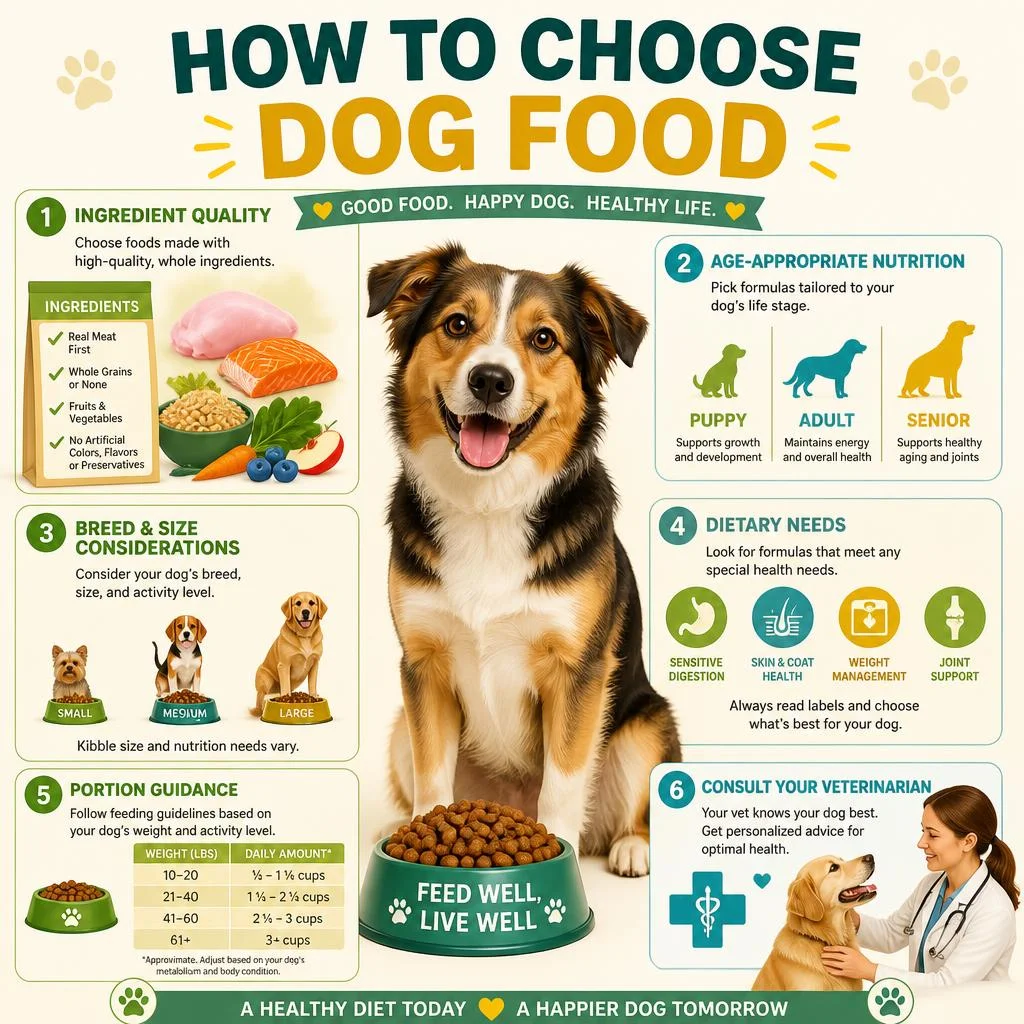
Choosing the right dog food is one of the most important decisions you will make as a pet owner. A well-planned diet helps support your dog’s overall health, maintain an appropriate body weight, and provide the nutrients needed for an active and comfortable life. However, with countless brands, formulas, ingredient lists, and feeding recommendations available, finding the right option can feel confusing, especially if you are caring for a dog for the first time.
The good news is that choosing suitable dog food does not have to be complicated. By understanding a few essential nutritional principles, learning how to read pet food labels, and considering your dog’s age, activity level, and health requirements, you can make a more informed decision.
This comprehensive guide explains how to choose dog food for your pet, from identifying a nutritionally complete formula to comparing dry and wet food, calculating feeding portions, and recognizing when professional veterinary advice is necessary.
Whether you have a playful puppy, an energetic adult dog, or a senior companion, these practical dog nutrition tips will help you build a feeding routine that supports your dog’s individual needs.
What Makes Dog Food a Good Choice?
The most suitable dog food is not necessarily the most expensive product or the one with the most attractive packaging. Instead, it is a diet that provides appropriate nutrition for your dog’s life stage, physical condition, lifestyle, and overall health.
Puppies require nutrients that support growth and development, while adult dogs generally need a diet designed to maintain their health and body condition. Senior dogs may benefit from adjustments based on changes in their activity, muscle mass, weight, or medical needs.
When comparing dog food products, begin by checking whether the formula is intended for dogs and whether it provides complete and balanced nutrition for the appropriate life stage. In the United States, the nutritional adequacy statement on a pet food label is particularly useful for understanding the product’s intended purpose.
You should also consider factors beyond the packaging, including:
- Your dog’s age, size, and life stage.
- Daily activity and exercise requirements.
- Current body weight and body condition.
- Known food sensitivities or medical conditions.
- The food’s nutritional adequacy and calorie content.
- Your ability to measure and provide appropriate daily portions.
Remember that even a well-formulated food may need portion adjustments to suit an individual dog. Monitoring your pet’s weight, energy, digestion, and overall condition can help you determine whether the feeding plan remains appropriate.
For more practical advice on raising a healthy and happy companion, explore our Dog Care for Beginners Guide.
What Does Complete and Balanced Dog Food Mean?
One of the most important terms to understand when shopping for dog food is complete and balanced nutrition. This description helps distinguish everyday diets designed to meet a dog’s nutritional requirements from products intended mainly as treats, supplements, or occasional additions.
According to the Association of American Feed Control Officials (AAFCO), a complete food supplies the required nutrients, while a balanced food provides those nutrients in appropriate proportions. The nutritional adequacy statement also identifies the life stage for which the food is intended.
Depending on the product, the statement may refer to:
- Growth: Formulated for puppies and developing dogs.
- Adult maintenance: Intended to meet the nutritional needs of adult dogs.
- Gestation and lactation: Designed for the nutritional demands of pregnancy and nursing.
- All life stages: Formulated to meet the applicable nutritional requirements across multiple life stages, subject to the product’s stated limitations.
These distinctions are important because nutritional requirements change as dogs grow and mature. A diet suitable for an adult dog may not provide the appropriate nutritional balance for a growing puppy.
It is equally important to understand that treats, toppers, and supplemental products are not necessarily complete diets. Some are intended only for intermittent or supplemental feeding and should not replace a nutritionally adequate main food.
When evaluating a product, read the full nutritional adequacy statement rather than relying exclusively on claims displayed prominently on the front of the package.
How to Choose Dog Food for Different Life Stages
Your dog’s life stage is one of the first factors to consider when selecting an appropriate diet. Nutritional requirements change with growth, adulthood, aging, and certain reproductive conditions.
Best Dog Food For Puppies
Puppies experience rapid physical development and need an appropriate balance of energy, protein, minerals, vitamins, and other essential nutrients. Choose a food specifically formulated for growth or for the relevant puppy life stage.
Puppy food should support healthy development without providing inappropriate amounts of calories or nutrients. Feeding too much can contribute to excessive weight gain, while an unsuitable diet may fail to meet the needs of a growing dog.
Large- and giant-breed puppies deserve particular attention because their growth patterns create specific nutritional considerations. Ask your veterinarian to recommend an appropriate growth diet and feeding plan rather than choosing a product based solely on a general puppy label.
Best Dog Food For Adult Dogs
Most healthy adult dogs benefit from a complete diet formulated for adult maintenance. However, not every adult dog has the same energy requirements.
A highly active dog may need more calories than a companion dog with a relatively sedentary lifestyle. Differences in body size, metabolism, reproductive status, and health can also affect feeding needs.
Choose an appropriate adult formula and adjust the daily amount according to your dog’s body condition, activity level, and individual requirements.
Dog Food For Senior Dogs
As dogs grow older, their nutritional needs may change. Some become less active, while others experience changes in muscle mass, appetite, digestion, or body weight.
There is no single senior dog food that is ideal for every older dog. The right choice depends on the animal’s condition, health history, and nutritional requirements.
Regular nutritional assessments, as recommended in veterinary guidance from the American Animal Hospital Association (AAHA), can help identify when changes to the diet or feeding routine may be appropriate.
How to Read a Dog Food Label Correctly
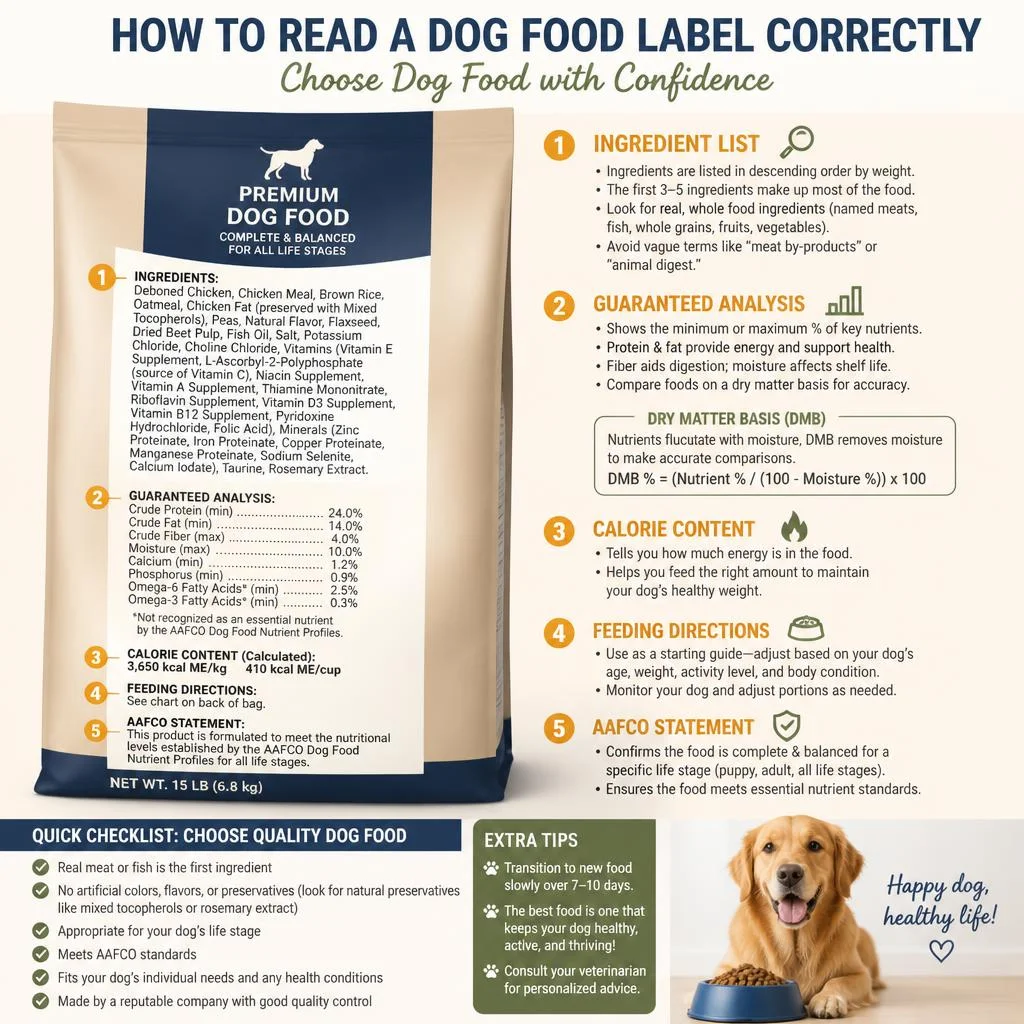
Understanding a dog food label is an essential part of choosing a suitable diet. Although packaging can contain a large amount of information, you can simplify the process by focusing on the details that explain the product’s intended use, nutritional content, and feeding recommendations.
| Dog Food Label Section | What It Means |
|---|---|
| Product name | Identifies the food and may describe its main characteristics or formulation. |
| Intended species | Confirms that the product is made for dogs rather than another animal. |
| Nutritional adequacy statement | Indicates whether the food is intended to provide complete and balanced nutrition for a specified life stage. |
| Guaranteed analysis | Lists guaranteed levels of specified nutrients, commonly including crude protein, crude fat, crude fiber, and moisture. |
| Ingredient list | Lists the ingredients in descending order by weight under applicable labeling rules. |
| Feeding instructions | Provides general recommendations for the amount of food to offer according to factors such as body weight. |
| Calorie content | Indicates the food’s energy content and helps with portion planning. |
| Manufacturer information | Helps you identify the company responsible for the product and contact it with questions. |
The ingredient list can provide useful information, but it should not be treated as a definitive ranking of nutritional quality. Ingredients are listed by weight, and differences in moisture content can influence their positions.
For example, an ingredient containing substantial water may appear higher on the list than a concentrated ingredient, even though the comparison does not directly reveal the finished food’s overall nutritional value.
The World Small Animal Veterinary Association (WSAVA) emphasizes the importance of assessing a pet food beyond its ingredient list. Nutritional adequacy, formulation expertise, quality control, calorie information, and manufacturer transparency can all contribute to a more informed decision.
Instead of judging a food by one label detail, evaluate the product as a whole.
Understanding Dog Food Ingredients and Nutrition
When comparing dog food brands, it is easy to become focused on individual ingredients. However, an ingredient’s name alone does not determine whether a finished diet provides appropriate nutrition.
Dogs require a balanced supply of essential nutrients, including proteins, fats, carbohydrates, vitamins, minerals, and water. These nutrients support normal body functions, tissue maintenance, energy requirements, and overall well-being.
The key question is whether the complete formula supplies the nutrients your dog needs in suitable amounts and proportions.
For example, finding a particular meat near the beginning of an ingredient list does not automatically mean that the food is more nutritious than another formula. Ingredient order reflects weight, not a comprehensive assessment of nutritional quality.
Similarly, ingredients that sound unfamiliar are not necessarily harmful, and familiar ingredients are not automatically evidence of a superior diet.
Are Premium And Natural Dog Foods Better?
Pet food packaging often uses appealing descriptions such as “premium,” “natural,” or “holistic.” Although these terms may influence purchasing decisions, they should not replace a careful nutritional assessment.
WSAVA notes that marketing descriptions such as “premium” and “holistic” may provide limited practical information when evaluating a diet’s nutritional suitability.
Rather than choosing a product because of an attractive claim, investigate its nutritional adequacy statement, calorie content, intended life stage, and feeding recommendations. You can also ask the manufacturer about formulation practices, nutritional expertise, and quality-control procedures.
A suitable diet is one that meets your dog’s nutritional needs, not simply one that uses the most persuasive marketing language.
Dry vs. Wet Dog Food: Which Is Better?
Dog food is available in several forms, including dry kibble, canned or packaged wet food, and combinations of different formats. Each option has characteristics that may make it more suitable for a particular dog or household.
Neither dry food nor wet food is automatically the best choice for every pet. Nutritional adequacy, calorie intake, individual preferences, health considerations, and practical feeding requirements are more important than the format alone.
| Dog Food Type | Potential Advantages | Important Considerations |
|---|---|---|
| Dry dog food | Generally convenient to store, measure, transport, and serve. | Check calorie density and portion size. Dry food contains less moisture than most wet formulas. |
| Wet dog food | Contains more water and may appeal to dogs that prefer a softer texture. | Check serving sizes, calorie content, storage instructions, and refrigeration requirements after opening. |
| Mixed feeding | Combines different textures and can offer flexibility in meal planning. | Account for calories from every food component to avoid excessive daily intake. |
| Veterinary therapeutic diets | May provide specialized nutritional support for certain diagnosed conditions. | Choose the appropriate formula with veterinary guidance when a medical condition is involved. |
If you decide to combine dry and wet food, check the nutritional information and calculate the portions of each product. Simply adding wet food to an existing dry-food portion may increase total calorie intake beyond your dog’s needs.
You should also follow the storage instructions on the package, particularly for opened wet food, to maintain food quality and safety.
Ultimately, the best dog food format is the one that provides appropriate nutrition and fits your dog’s needs and your household’s feeding routine.
How Much Food Should You Feed Your Dog?
Choosing a nutritionally appropriate food is only part of responsible feeding. The amount you serve each day also affects your dog’s weight, energy balance, and overall health.
Begin with the feeding directions on the package. These recommendations offer a starting point, but they are not exact requirements for every dog. Individual calorie needs can vary significantly, even between dogs of similar size.
Factors that influence how much food a dog needs include:
- Age and life stage.
- Body weight and body condition.
- Daily exercise and activity levels.
- Metabolism and individual energy requirements.
- Spaying or neutering status.
- Pregnancy or nursing, when applicable.
- Existing medical conditions.
- The calorie density of the selected food.
- The calories supplied by treats and additional foods.
AAHA recommends an individualized approach to nutritional assessment, including consideration of body condition and lifestyle. For this reason, a feeding chart should be treated as guidance rather than a fixed rule.
Measure your dog’s meals instead of estimating portions by eye. Measuring cups may be convenient, but a kitchen scale can provide more consistent results when accurate portion control is important.
Monitor your dog’s body condition regularly. If your pet is gaining or losing weight unexpectedly, discuss the feeding plan with your veterinarian before making substantial changes.
Remember that healthy feeding is not simply about filling the bowl. It is about providing the appropriate amount of nutrition for your dog’s individual requirements.
Dog Treats, Snacks, and Extra Foods
Treats can be valuable tools for training, rewarding desirable behavior, and strengthening your relationship with your dog. However, they should complement a balanced diet rather than become a major source of daily nutrition.
Even small treats contain calories, and frequent rewards can add up throughout the day. If your dog receives training treats, dental chews, food toppers, or table scraps, include those extras when considering total calorie intake.
As a general guideline, treats and other foods that are not complete and balanced should usually account for no more than 10% of a dog’s daily calories, unless your veterinarian recommends a different approach. The main diet should provide the majority of the dog’s nutritional intake.
Human foods also require caution. Some are unsuitable for dogs, and certain foods can be toxic even in relatively small amounts. Examples include chocolate, grapes, raisins, onions, garlic, and products containing xylitol.
Before introducing unfamiliar snacks, verify that they are safe for dogs. If you suspect your dog has eaten a toxic substance, contact a veterinarian or an appropriate animal poison service promptly.
To keep your dog’s diet balanced:
- Choose treats that are appropriate for your dog’s size and needs.
- Use small portions for training rewards.
- Include treat calories in your daily feeding plan.
- Avoid sharing foods unless you know they are safe for dogs.
- Keep fresh drinking water available at all times.
A thoughtful approach to treats allows you to reward your pet without unintentionally undermining an otherwise appropriate diet.
Special Dietary Needs, Allergies, and Veterinary Diets
Some dogs require a more individualized nutritional plan because of medical conditions, food sensitivities, digestive problems, weight concerns, or other health-related factors.
In these situations, a standard commercial diet may not be the most appropriate option. A veterinarian can assess the dog’s symptoms, medical history, body condition, and nutritional requirements before recommending a suitable feeding strategy.
Food allergies and intolerances deserve particular care. Skin irritation, itching, vomiting, or digestive disturbances can have several possible causes, so these symptoms do not automatically prove that a dog is allergic to a particular ingredient.
If a food allergy is suspected, your veterinarian may recommend a structured dietary trial rather than repeatedly switching foods or purchasing products based on marketing claims.
Therapeutic diets can be useful for specific medical purposes, but they should be selected according to the condition being managed and the dog’s overall nutritional requirements.
Is Homemade Dog Food A Good Option?
Homemade dog food may appeal to owners who want greater control over ingredients. However, preparing a nutritionally complete diet is more complicated than combining meat, vegetables, rice, or other familiar foods.
A recipe can appear healthy while still providing inadequate amounts of essential nutrients or inappropriate nutrient proportions. Problems may develop when a homemade diet is used as the dog’s main food without proper formulation.
If you are considering home-prepared meals as a long-term diet, consult a veterinarian or a board-certified veterinary nutritionist where available. Professional guidance can help ensure that the recipe is suitable for your dog’s life stage and individual needs.
Should You Feed Your Dog A Raw Diet?
Raw feeding is frequently discussed in online pet communities, but popularity alone does not establish that a diet is nutritionally complete or safe.
Raw animal products can contain harmful bacteria and other pathogens that may affect pets and people. Food handling, household circumstances, and the nutritional balance of the diet also require consideration.
Before adopting a raw feeding plan, discuss its potential benefits, limitations, nutritional requirements, and food-safety risks with your veterinarian. This is particularly important when children, older adults, pregnant people, or immunocompromised individuals live in the household.
Regardless of the feeding approach you prefer, your dog’s nutritional needs and food safety should remain the primary considerations.
How to Choose a Reliable Dog Food Brand
Once you understand the basics of dog nutrition, the next step is evaluating the manufacturer behind the product. A trustworthy brand should be able to provide meaningful information about its food rather than relying entirely on advertising.
WSAVA’s pet food selection guidance encourages owners and veterinary professionals to consider a company’s nutritional expertise, formulation process, quality control, and willingness to answer questions about its products.
When comparing dog food brands, consider asking the following questions:
- Is the product specifically intended for dogs?
- Is the formula suitable for my dog’s life stage?
- Does the packaging provide a clear nutritional adequacy statement?
- Are feeding instructions and calorie information available?
- Can the manufacturer explain how the food is formulated?
- Does the company have appropriate nutritional expertise?
- Can the manufacturer describe its quality-control and product-testing procedures?
- Is there a reliable way to contact the company with questions?
- Does the food meet my dog’s individual nutritional requirements?
You do not need to choose a brand simply because it is expensive, widely advertised, or recommended by an online personality. A more reliable approach is to evaluate the information available about the food and determine whether it meets your dog’s needs.
If the manufacturer cannot provide basic information about nutritional adequacy, calorie content, formulation, or quality control, consider discussing alternative products with your veterinarian.
Common Dog Food Mistakes Every Beginner Should Avoid
Even caring and experienced pet owners can make mistakes when choosing or serving dog food. Understanding the most common problems can help you develop a more consistent feeding routine.
1. Choosing Food Based Only On The Ingredient List
Ingredients are important, but they do not provide a complete picture of nutritional quality. Review the nutritional adequacy statement, calorie information, and intended life stage before making a decision.
2. Ignoring Your Dog’s Life Stage
Puppies, adult dogs, and some dogs with specific nutritional needs require different feeding approaches. Always check that the formula is appropriate for your pet’s current stage of life.
3. Following Feeding Recommendations Without Adjustments
Package instructions are useful starting points, but they may not reflect your dog’s exact energy requirements. Monitor body condition and adjust portions with veterinary guidance when necessary.
4. Switching Dog Food Too Quickly
Abrupt dietary changes can cause digestive upset in some dogs. When changing foods, a gradual transition over several days is often appropriate. A transition lasting around 5–7 days may work for many healthy dogs, but the schedule should be adjusted if your veterinarian recommends a different approach or if your dog has a sensitive digestive system.
5. Overlooking Calories In Treats
Treats, chews, and food toppers contribute to total calorie intake. Ignoring them can make weight management more difficult, even when the main food is appropriate.
6. Trusting Marketing Claims Without Checking The Label
Words such as “natural,” “premium,” and “holistic” should not replace an evaluation of nutritional adequacy, formulation, and feeding suitability.
7. Changing Diets Repeatedly Without A Clear Reason
Frequently switching between products can make it difficult to identify which diet suits your dog and may complicate the assessment of digestive or skin problems. Choose a suitable formula and consult your veterinarian if persistent symptoms suggest that a change may be necessary.
Avoiding these mistakes can make dog feeding more predictable and help you focus on your pet’s long-term health.
When Should You Consult a Veterinarian About Dog Food?
Many healthy dogs can be fed an appropriate commercial diet selected through careful label reading and routine veterinary care. However, professional advice becomes particularly important when nutritional needs are complicated by illness, unexpected weight changes, or persistent symptoms.
Consider seeking veterinary guidance if your dog experiences:
- Unexplained weight gain or weight loss.
- Persistent vomiting or diarrhea.
- Ongoing itching or suspected food allergies.
- Reduced appetite or unusual changes in eating habits.
- Difficulty maintaining an appropriate body condition.
- A diagnosed medical condition requiring dietary management.
- Growth or development concerns in a puppy.
Your veterinarian can assess your dog’s health history, lifestyle, body condition, and nutritional requirements before recommending a feeding plan. If necessary, the veterinarian may suggest a therapeutic diet or refer you to a veterinary nutrition specialist.
Routine nutritional assessments are also valuable for healthy dogs because dietary requirements can change over time. A food that worked well during adulthood may need to be reconsidered as your dog ages or develops new health concerns.
Dog Food Buying Checklist for Beginners
Before purchasing a new dog food, use this checklist to make sure you have considered the most important factors.
- ☐ The product is specifically intended for dogs.
- ☐ The formula matches my dog’s life stage.
- ☐ I checked the nutritional adequacy statement.
- ☐ I reviewed the guaranteed analysis and other available nutritional information.
- ☐ I checked the calorie content.
- ☐ I reviewed the feeding instructions and portion recommendations.
- ☐ I considered my dog’s weight, body condition, and activity level.
- ☐ I checked whether my dog has special dietary or medical requirements.
- ☐ I considered the calories provided by treats and additional foods.
- ☐ I looked beyond marketing claims and evaluated the complete label.
- ☐ I can contact the manufacturer for information about the product.
- ☐ I will consult my veterinarian if I have concerns about my dog’s nutrition.
Using this checklist can help you compare products more objectively and avoid making a decision based solely on advertising, price, or a single ingredient.
Frequently Asked Questions About Choosing Dog Food
What is the best dog food for dogs?
There is no single best dog food for every dog. The right choice depends on the dog’s life stage, health, activity level, body condition, and individual nutritional requirements. Start by choosing a food that provides complete and balanced nutrition for the appropriate life stage, and consult your veterinarian if your dog has special dietary needs.
How do I choose the best dog food for a puppy?
Choose a diet specifically formulated for puppy growth or the appropriate growth life stage. Puppies need nutrition that supports healthy development, and large- or giant-breed puppies may have additional dietary considerations. Ask your veterinarian for guidance if you are unsure which formula is suitable.
Is dry dog food better than wet dog food?
Neither dry nor wet dog food is automatically better for every pet. Dry food is convenient to store and measure, while wet food contains more moisture and may appeal to dogs that prefer softer textures. The best option depends on nutritional adequacy, calorie intake, individual preferences, and any relevant health considerations.
How can I tell if dog food is nutritionally complete?
Read the nutritional adequacy statement on the packaging. In the United States, this statement can indicate whether the product is formulated to provide complete and balanced nutrition for a specified life stage. If the label is unclear, contact the manufacturer or ask your veterinarian for help evaluating the product.
Should I choose dog food based on its first ingredient?
No. The first ingredient alone does not establish the overall nutritional quality of a dog food. Ingredients are listed by weight, and differences in moisture content can affect their order. Consider the complete ingredient list alongside the nutritional adequacy statement, calorie content, and manufacturer information.
How much food should I feed my dog each day?
Begin with the feeding directions on the product label, then consider your dog’s weight, age, activity level, body condition, and calorie requirements. Measure portions consistently and monitor weight over time. Your veterinarian can help determine an appropriate feeding amount if your dog’s needs are unclear.
How often should I change my dog’s food?
There is no universal schedule for changing dog food. A nutritionally appropriate diet may remain suitable for an extended period, provided it continues to meet your dog’s needs. Consider changing the diet when life stage, health, body condition, or other requirements change. Introduce a new food gradually when appropriate, and seek veterinary advice if medical or digestive concerns are involved.
Can I mix dry and wet dog food?
Yes, dry and wet food can be combined when both products are appropriate for your dog. Calculate the portions carefully so that the combined meals provide an appropriate amount of calories. Check the nutritional adequacy of the foods and consult your veterinarian if your dog requires a specialized diet.
Are expensive dog food brands always better?
No. Price alone does not establish nutritional quality. Evaluate the food’s nutritional adequacy, intended life stage, calorie information, manufacturer expertise, and quality-control practices. A suitable diet should meet your dog’s nutritional requirements rather than simply fit a higher price category.
Should I consult a veterinarian before changing my dog’s food?
Veterinary advice is especially important if your dog has a medical condition, persistent digestive problems, suspected food allergies, unexplained weight changes, or other special nutritional requirements. For a healthy dog, reviewing the label and following a sensible transition plan can help, but your veterinarian remains a valuable source of individualized guidance.
Final Thoughts: Choosing the Right Dog Food
Learning how to choose dog food becomes much easier when you focus on nutrition rather than marketing. Start by selecting a formula intended for dogs, check that it provides complete and balanced nutrition for the appropriate life stage, and review the calorie content and feeding instructions.
Next, consider your dog’s age, activity level, body condition, preferences, and any special dietary requirements. Remember that the ingredient list is only one part of the decision, and no single food format or brand is automatically the best choice for every dog.
Responsible feeding also involves measuring portions, accounting for treats, providing fresh water, and monitoring changes in weight or health. If your dog develops nutritional concerns or needs a specialized diet, seek advice from a veterinarian.
Most importantly, remember that dog nutrition is an ongoing process rather than a one-time purchase. As your companion grows, ages, or experiences changes in health and lifestyle, reviewing the feeding plan can help ensure that it remains appropriate.
For more practical advice on keeping your companion healthy and happy, explore our Ultimate Dog Care Guide for Beginners and discover more helpful pet care resources at Nest Pet Animals.