Table of Contents
- 10 Best Dog Breeds For First-Time Owners: Find Your Perfect Companion
- What Should First-Time Dog Owners Look For When Choosing A Dog?
- 10 Best Dog Breeds For First-Time Owners
- Dog Breed Comparison: Exercise, Grooming, And Lifestyle
- How To Choose The Best Dog For Your Lifestyle
- Common Mistakes First-Time Dog Owners Should Avoid
- Frequently Asked Questions About The Best Dog Breeds For First-Time Owners
- Final Thoughts: Finding The Right First Dog For Your Home
10 Best Dog Breeds For First_Time Owners: Find Your Perfect Companion
Bringing your first dog home is an exciting experience, but choosing the right companion requires more than simply falling in love with a particular breed. Every dog has unique characteristics, including temperament, energy levels, grooming requirements, health considerations, and training needs. Finding a dog that fits your lifestyle is essential for building a happy and lasting relationship.
The best dog breeds for first-time owners are generally those whose personalities and care requirements match their owners’ experience, daily routines, and living environments. Some breeds are naturally sociable and eager to learn, while others need more patience, exercise, or specialized care.
In this guide, we’ll explore 10 beginner-friendly dog breeds, from affectionate small companions to active family dogs. You’ll learn about their personalities, exercise requirements, grooming needs, and important considerations to help you choose the right dog for your home.
What Should First-Time Dog Owners Look for When Choosing a Dog?
Choosing your first dog is a long-term commitment. While certain breeds are often recommended for beginners, no single breed is suitable for every household. Your ideal companion should fit your lifestyle, available time, living arrangements, and ability to provide consistent care.
Before deciding which dog to bring home, consider these essential factors:
- Temperament and personality: Look for a dog whose typical personality suits your household. Friendly, adaptable, and sociable dogs may be easier for some beginners to manage, although individual temperament and early experiences are equally important.
- Daily exercise requirements: Consider how much physical activity you can realistically provide. Some dogs need extended walks, outdoor adventures, and active play, while others are comfortable with shorter walks and moderate daily exercise.
- Training and behavior: Every dog needs consistent guidance to develop good manners and appropriate behavior. Breeds that respond well to positive reinforcement may make the learning process more enjoyable for inexperienced owners.
- Grooming and coat maintenance: A dog’s appearance can influence its grooming requirements. Long-haired and curly-coated breeds often need frequent brushing, regular bathing, and professional grooming appointments.
- Health and financial responsibilities: Owning a dog involves ongoing expenses, including nutritious food, veterinary examinations, vaccinations, parasite prevention, grooming, training, and unexpected medical treatment.
- Companionship and time alone: Dogs are social animals that need attention and interaction. If your schedule requires you to spend long periods away from home, consider how you will provide appropriate companionship and gradually teach your dog to remain comfortable alone.
Remember that breed characteristics describe general tendencies rather than guaranteed behavior. Meeting an individual dog and learning about its personality, background, and health requirements can help you make a more informed decision.
10 Best Dog Breeds for First-Time Owners
The following breeds offer a variety of personalities, sizes, and activity levels. Each can make a wonderful companion when its individual needs match the owner’s lifestyle and experience.
1. Labrador Retriever
Best for: Active individuals and families looking for a friendly, trainable, and energetic companion.
The Labrador Retriever is one of the most recognizable family dog breeds, appreciated for its sociable personality, enthusiasm, and strong connection with people. Labradors often enjoy outdoor adventures, interactive games, swimming, and spending quality time with their families.
Their willingness to participate in activities and learn new commands can make them rewarding companions for first-time dog owners who are prepared to invest time in training. With consistent guidance and positive reinforcement, many Labradors develop excellent household manners.
However, this breed is not a low-energy companion. Labrador Retrievers need regular physical exercise and mental stimulation to remain healthy and prevent boredom-related behaviors. Their short, dense coats are relatively straightforward to maintain, although regular shedding should be expected.
- Exercise: Moderate to high, with daily walks, active play, and mental enrichment.
- Grooming: Moderate; regular brushing helps manage shedding.
- Training: Generally responsive to reward-based training and consistent routines.
- Consider before choosing: Labradors require considerable daily attention and activity, particularly during their energetic puppy and adolescent stages.
2. Golden Retriever
Best for: Families and individuals who enjoy outdoor activities and want an affectionate, people-oriented dog.
Golden Retrievers are widely appreciated for their gentle personalities, intelligence, and affectionate relationships with their families. They often enjoy meeting people, learning commands, playing fetch, and participating in everyday household activities.
Their eagerness to interact and work alongside their owners can make training an enjoyable experience for beginners. Early socialization, consistent boundaries, and reward-based teaching help Golden Retrievers develop into well-mannered adult dogs.
Despite their friendly reputation, Golden Retrievers require regular exercise, mental stimulation, and meaningful interaction. Their beautiful double coats also need frequent brushing to remove loose hair and prevent tangles, especially during seasonal shedding periods.
- Exercise: Moderate to high, including daily walks, interactive play, and outdoor activities.
- Grooming: Moderate to high; regular brushing is important to maintain coat condition and manage shedding.
- Training: Often enthusiastic learners who respond well to positive reinforcement.
- Consider before choosing: Account for their adult size, exercise requirements, grooming needs, and long-term veterinary expenses.
3. Cavalier King Charles Spaniel
Best for: Individuals and families looking for a small, affectionate, and companionship-focused dog.
The Cavalier King Charles Spaniel is known for its sweet expression, gentle personality, and strong attachment to its human companions. These small dogs often enjoy being close to their families and can adapt to different home environments when their physical and emotional needs are met.
Many Cavaliers appreciate daily walks, indoor play, and relaxed family time. Their manageable size and generally sociable nature can make them appealing to people experiencing dog ownership for the first time.
However, their affectionate personality also means they benefit from regular companionship and gradual independence training. Their silky coats require consistent brushing, with particular attention to the feathering around their ears, legs, and tail.
An important consideration is the breed’s inherited health risks. Cavalier King Charles Spaniels are associated with serious conditions, including mitral valve disease and Chiari-like malformation with syringomyelia. Prospective owners should carefully investigate health screening, responsible breeding practices, and potential veterinary costs.
- Exercise: Moderate, with daily walks and opportunities for gentle play.
- Grooming: Moderate; regular brushing and ear care help maintain a healthy coat.
- Training: Usually responds well to gentle, consistent, reward-based methods.
- Consider before choosing: Research the breed’s health concerns and ask about appropriate health testing before purchasing or adopting.
4. Poodle
Best for: Owners seeking an intelligent, highly trainable companion who can provide regular grooming and mental stimulation.
Poodles are among the most intelligent and versatile dog breeds. Available in Standard, Miniature, and Toy varieties, they offer different size options for households with varying living arrangements.
Their intelligence and eagerness to learn can make them particularly rewarding for first-time owners who enjoy teaching commands, practicing tricks, and introducing interactive activities. Many Poodles excel at obedience training and benefit from games that challenge their problem-solving abilities.
Another attractive characteristic is their curly coat, which generally sheds less visibly than many other dog coats. However, this should not be confused with low-maintenance grooming. Poodles require frequent brushing and regular professional clipping to prevent matting and maintain coat health.
Their exercise requirements vary according to size, age, and individual temperament, but all varieties benefit from daily activity and mental enrichment.
- Exercise: Moderate to high, depending on size, age, and individual energy level.
- Grooming: High; regular brushing and professional coat maintenance are essential.
- Training: Highly intelligent and often responsive to structured, reward-based learning.
- Consider before choosing: Include professional grooming expenses, regular coat care, and mental enrichment in your long-term budget.
5. Shih Tzu
Best for: People seeking a small companion dog with relatively modest exercise requirements.
Originally developed as companion dogs, Shih Tzus are known for their affectionate personalities and love of spending time with people. They can adapt to different living environments, including apartments, provided their daily needs are properly addressed.
Compared with highly active working breeds, Shih Tzus generally require less strenuous physical activity. Short walks, indoor play, and regular interaction can help keep them physically and mentally engaged.
Their long, luxurious coats are one of their most recognizable features, but they also require considerable maintenance. Frequent brushing and regular grooming appointments are important, although many owners choose a shorter haircut to make everyday coat care more manageable.
Shih Tzus also have a short facial structure, which can contribute to breathing difficulties and reduced heat tolerance. Owners should avoid excessive exercise in hot weather and seek veterinary attention if their dog shows signs of breathing distress.
- Exercise: Low to moderate, with regular short walks and indoor activities.
- Grooming: High; frequent brushing and regular coat maintenance are recommended.
- Training: Benefits from patient, consistent instruction and positive reinforcement.
- Consider before choosing: Be prepared for regular grooming and potential health concerns associated with short-muzzled breeds.
6. Bichon Frise
Best for: Owners looking for a cheerful, playful small dog who can provide regular attention and grooming.
The Bichon Frise is a charming companion breed recognized for its fluffy white coat, cheerful expression, and sociable personality. These dogs often enjoy playing with their families, meeting familiar people, and participating in everyday activities.
Their compact size can make them suitable for apartment living and smaller homes. Nevertheless, they still need daily walks, interactive play, training, and opportunities to explore their surroundings.
One of the main responsibilities of owning a Bichon Frise is maintaining its distinctive coat. Regular brushing helps prevent tangles and mats, while professional grooming is generally necessary to keep the coat clean and manageable.
Like other companion breeds, Bichons benefit from learning household routines early. Gradual alone-time training is also important because some individuals may find extended periods without human interaction challenging.
- Exercise: Moderate, with daily walks and playful activities.
- Grooming: High; frequent brushing and professional grooming help prevent matting.
- Training: Responds well to short, enjoyable sessions using positive reinforcement.
- Consider before choosing: Plan for regular grooming expenses, companionship, and gradual independence training.
7. Papillon
Best for: Owners who want a small, intelligent, and energetic dog that enjoys learning and interactive play.
The Papillon is a small companion breed easily recognized by its distinctive butterfly-shaped ears. Despite its delicate appearance, this dog is often lively, confident, curious, and surprisingly athletic.
Papillons enjoy mental challenges and can become enthusiastic participants in obedience training, agility activities, and interactive games. Their intelligence and eagerness to learn can make them enjoyable companions for beginners who appreciate an active relationship with their dogs.
Their small size can suit apartments and smaller homes, but it does not eliminate their need for regular exercise and stimulation. A Papillon that receives insufficient activity or attention may become bored and develop unwanted behaviors.
Their fine, silky coat generally requires regular brushing to prevent tangles and maintain its appearance. Because of their small bodies, supervised interactions with young children and larger dogs are also important.
- Exercise: Moderate, including daily walks, playtime, and mental enrichment.
- Grooming: Low to moderate; regular brushing helps maintain coat condition.
- Training: Intelligent and often highly enthusiastic about learning new commands and tricks.
- Consider before choosing: Do not mistake a small body for low energy. Papillons need consistent training, interaction, and appropriate supervision.
8. Whippet
Best for: Owners who enjoy daily walks and can provide safe opportunities for running and outdoor exercise.
Whippets are elegant sighthounds known for their athletic build, impressive speed, and generally relaxed behavior indoors. Although they can be energetic outdoors, many enjoy spending quiet time relaxing with their families after receiving sufficient exercise.
Their short, fine coats are relatively easy to maintain, making them appealing to people who prefer a dog with modest grooming requirements. Whippets also tend to appreciate comfortable sleeping areas because their lean bodies and limited body fat offer relatively little insulation against cold weather.
However, prospective owners should understand the breed’s strong chasing instinct. Whippets may instinctively pursue small animals, so secure fencing and appropriate leash management are important. Off-leash exercise should only take place in safe, enclosed areas.
Gentle training, consistent routines, and early socialization can help these dogs adapt successfully to their new homes.
- Exercise: Moderate, including daily walks and opportunities for safe running.
- Grooming: Low; occasional brushing and routine basic care are generally sufficient.
- Training: Benefits from gentle, patient, and reward-based instruction.
- Consider before choosing: Provide secure exercise spaces, protect the dog from cold weather, and manage interactions with smaller animals carefully.
9. Havanese
Best for: Individuals and families looking for a sociable small dog that enjoys companionship and everyday interaction.
The Havanese is a friendly companion breed known for its affectionate personality, playful nature, and strong interest in family life. These dogs often enjoy following their owners around the house, participating in games, and learning simple commands.
Their adaptable size makes them suitable for different types of homes, including apartments, as long as they receive sufficient exercise, attention, and mental stimulation.
Havanese dogs often respond positively to patient training and reward-based teaching. Their people-oriented personalities can make them enjoyable companions for beginners who have enough time to include a dog in their daily routines.
Their soft coat requires regular brushing and maintenance, particularly when kept long. Some owners prefer shorter trims to simplify grooming, although consistent coat care remains necessary.
Because they enjoy human interaction, Havanese dogs may struggle when left alone for extended periods. Teaching independence gradually and arranging appropriate care during long absences can help prevent difficulties.
- Exercise: Moderate, with daily walks and interactive play.
- Grooming: Moderate to high, depending on coat length and grooming style.
- Training: Generally responsive to consistency, encouragement, and positive reinforcement.
- Consider before choosing: Make sure you can provide regular companionship, coat maintenance, and gradual alone-time training.
10. Mixed-Breed Rescue Dog
Best for: First-time owners who are open to different sizes, personalities, backgrounds, and individual care requirements.
Not every excellent first dog belongs to a recognized purebred breed. A mixed-breed rescue dog can be an equally wonderful companion, especially when its personality and lifestyle requirements match those of its future owner.
One advantage of adopting through a reputable shelter or rescue organization is the opportunity to learn about an individual dog’s established personality. Staff members may be able to provide useful information about its activity level, social behavior, experience with children, and interactions with other animals.
Adult rescue dogs can be particularly suitable for some beginners because their size and general temperament are often easier to assess than those of young puppies. However, every rescue dog has a different history, and some may need additional patience, socialization, or behavioral support.
Rather than focusing exclusively on appearance or breed labels, consider the dog’s individual characteristics and the type of care it requires.
- Exercise: Varies according to age, size, health, and individual personality.
- Grooming: Depends on coat type, length, and specific care requirements.
- Training: Assess existing habits and provide consistent guidance using positive reinforcement.
- Consider before choosing: Ask the shelter about the dog’s medical background, behavioral history, socialization, and any known challenges before adoption.
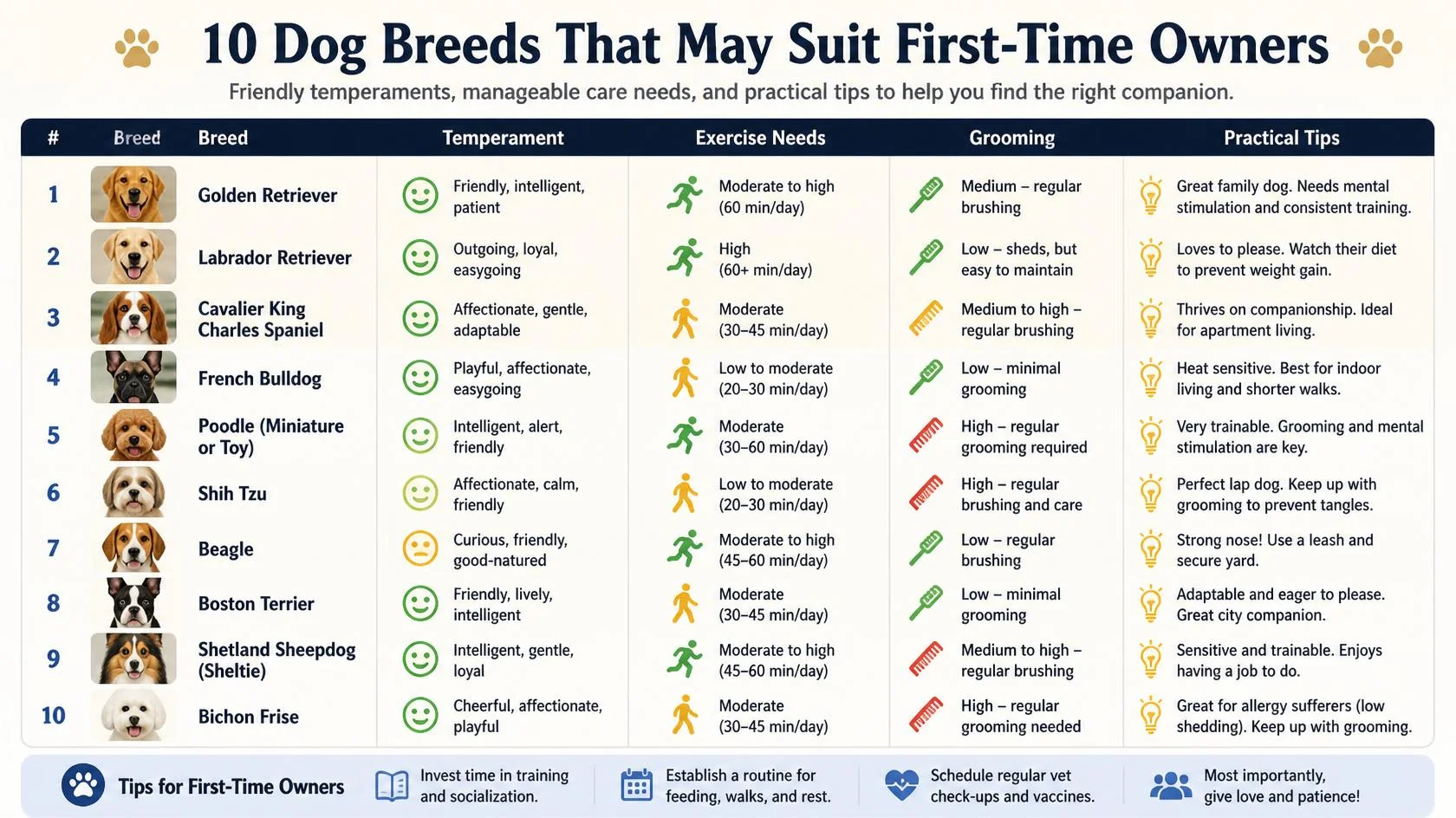
Dog Breed Comparison: Exercise, Grooming, and Lifestyle
Choosing between different dog breeds becomes easier when you compare their everyday requirements. The following table provides a quick overview of the ten options discussed above.
| Dog Breed | Typical Activity Level | Grooming Requirements | Potential Lifestyle Match |
|---|---|---|---|
| Labrador Retriever | Moderate to high | Moderate | Active individuals and families |
| Golden Retriever | Moderate to high | Moderate to high | Active family households |
| Cavalier King Charles Spaniel | Moderate | Moderate | Companion-focused households |
| Poodle | Moderate to high | High | Owners who enjoy training and mental activities |
| Shih Tzu | Low to moderate | High | Less-active households |
| Bichon Frise | Moderate | High | Homes suited to small companion dogs |
| Papillon | Moderate | Low to moderate | Owners who enjoy interactive activities |
| Whippet | Moderate | Low | Homes with access to secure exercise areas |
| Havanese | Moderate | Moderate to high | Companion-focused individuals and families |
| Mixed-Breed Rescue Dog | Varies | Varies | Owners choosing according to individual temperament |
Use this comparison as a starting point rather than a strict ranking. A dog’s age, health, personality, training, and individual circumstances can significantly influence its actual needs.
How to Choose the Best Dog for Your Lifestyle
Finding the right first dog involves understanding your own lifestyle just as much as researching different breeds. A dog that thrives in an active household may struggle in a home where daily exercise and interaction are limited.
Consider these practical steps before making your decision.
1. Evaluate Your Daily Schedule
Dogs need consistent care throughout the day, including feeding, exercise, training, playtime, and companionship. Before bringing a puppy or adult dog home, consider how much time you can realistically dedicate to these responsibilities.
If you work or study outside the home for extended periods, arrange suitable supervision, toilet breaks, and interaction. Puppies generally require more frequent attention and training than adult dogs.
2. Consider Your Living Space and Environment
Your home environment can influence which dog will be most comfortable with you. Some larger breeds need more room to move around, while many smaller breeds can adapt well to apartment living.
However, having a large garden does not replace daily walks, mental stimulation, training, or social interaction. Apartment owners can also raise happy, healthy dogs when they consistently meet their companions’ physical and behavioral needs.
Consider practical details such as stairs, shared spaces, noise restrictions, access to walking areas, and local pet ownership regulations.
3. Match the Dog’s Energy Level to Your Lifestyle
Energy levels are among the most important factors when selecting a beginner-friendly dog breed.
If you enjoy hiking, running, and outdoor adventures, an active Labrador Retriever or Golden Retriever may be worth considering. If you prefer shorter walks and a quieter daily routine, a Shih Tzu or another suitable companion breed might be a better match.
Be realistic about your long-term activity level. Choose a dog whose exercise requirements you can meet consistently, rather than selecting a breed based on activities you only occasionally enjoy.
4. Calculate Grooming Expenses and Long-Term Dog Care Costs
Responsible dog ownership involves financial commitments that extend well beyond the initial adoption or purchase fee.
Your budget should include:
- High-quality dog food appropriate for your pet’s age and nutritional requirements.
- Routine veterinary examinations and recommended vaccinations.
- Parasite prevention and other preventive healthcare.
- Professional grooming and regular coat maintenance when necessary.
- Training classes, toys, collars, leashes, and essential supplies.
- Emergency veterinary treatment and unexpected medical expenses.
Remember that a small dog is not automatically cheaper to maintain. Some smaller breeds have extensive grooming requirements or specific health considerations that can increase their overall care expenses.
5. Spend Time With the Dog Before Making a Decision
Meeting a potential companion is one of the most valuable steps in choosing your first dog.
Observe how the dog responds to people, unfamiliar environments, handling, and everyday situations. Ask about its health history, previous experiences, socialization, and behavioral characteristics.
If you decide to purchase a puppy, choose a responsible breeder who prioritizes health, appropriate screening, and good welfare practices. If you prefer adoption, ask a reputable shelter or rescue organization about the dog’s personality, medical background, and known needs.
Taking the time to understand an individual dog’s characteristics can help you avoid unsuitable matches and establish realistic expectations.
Common Mistakes First-Time Dog Owners Should Avoid
Becoming a dog owner for the first time can involve a learning curve. Many difficulties arise when people underestimate the responsibilities associated with caring for an animal.
Avoiding these common mistakes can make the transition easier for both you and your new companion.
- Choosing a dog based only on appearance: An attractive breed may have exercise, grooming, training, or health requirements that do not match your lifestyle. Research its needs before making a commitment.
- Underestimating the importance of training: Every dog needs guidance to learn household routines, appropriate social behavior, and basic commands. Begin with consistent, positive training as early as possible.
- Assuming small dogs require little exercise: Size does not determine energy level. Many small breeds are active, intelligent, and need regular physical activity and mental enrichment.
- Leaving a new dog alone for extended periods: Dogs need companionship and time to adjust to their surroundings. Introduce alone time gradually and arrange appropriate supervision when necessary.
- Overlooking breed-related health concerns: Some breeds are more susceptible to inherited or structural health problems. Research potential conditions and plan for regular veterinary care.
- Expecting immediate behavioral changes: Moving into a new home can be stressful for dogs. Allow your companion time to become familiar with its environment, establish routines, and develop trust.
If you are preparing to welcome your first canine companion, explore our Ultimate Dog Care Guide for Beginners for additional advice on feeding, grooming, training, and everyday dog care.
Frequently Asked Questions About the Best Dog Breeds for First-Time Owners
Which Dog Breed Is Best for First-Time Owners?
There is no single dog breed that is perfect for every beginner. Labrador Retrievers, Golden Retrievers, Poodles, and several companion breeds can make excellent first dogs when their needs match the owner’s lifestyle. Consider temperament, exercise requirements, grooming, health, and individual personality before choosing.
Are Small Dogs Easier to Handle for First-Time Owners?
Not necessarily. Small dogs may be easier to accommodate in apartments and smaller homes, but they still require training, exercise, social interaction, and regular veterinary care. Some small breeds also have high energy levels or demanding grooming requirements.
Are Mixed-Breed Dogs a Good Choice for First-Time Owners?
Yes. A mixed-breed dog can be an excellent first companion. The most important factors are its individual temperament, activity level, health, background, and care requirements. Reputable shelters and rescue organizations can help match you with a dog that suits your household.
Which Beginner-Friendly Dog Breeds Require Less Grooming?
Short-coated breeds such as Whippets and Labrador Retrievers generally require less coat maintenance than long-haired or curly-coated dogs. However, they still need basic grooming, regular brushing, nail care, and routine hygiene. Lower grooming requirements do not necessarily mean less shedding or fewer overall care responsibilities.
Can a First-Time Dog Owner Adopt an Adult Dog?
Absolutely. An adult dog can be an excellent choice for someone getting a dog for the first time. Its established size, general temperament, and activity level may be easier to assess than those of a puppy. Before adopting, ask the shelter or rescue organization about its behavior, medical history, previous experiences, and adjustment needs.
How Can I Tell If I Am Ready to Own My First Dog?
You are better prepared for dog ownership when you can provide consistent daily care, exercise, training, companionship, and appropriate veterinary treatment. You should also have a realistic financial plan and arrangements for holidays, emergencies, and periods when you cannot be home. Discussing these responsibilities with everyone in your household is an important part of preparing for your first dog.
Final Thoughts: Finding the Right First Dog for Your Home
Choosing among the best dog breeds for first-time owners is ultimately about finding a companion whose personality, energy level, and care requirements fit your everyday life.
Labrador Retrievers and Golden Retrievers can be wonderful choices for active individuals and families. Shih Tzus, Bichon Frises, and Havanese may appeal to people seeking smaller companion dogs, while Poodles and Papillons offer intelligence and enthusiasm for training. Whippets and mixed-breed rescue dogs can also be excellent companions when their individual needs suit the household.
Before making your final decision, take time to research each breed, understand its potential health concerns, and meet the individual dog whenever possible. Remember that responsible ownership involves patience, consistency, proper nutrition, regular veterinary care, and plenty of attention.
Your first dog does not need to be the most popular breed or the easiest-looking companion. It needs to be a dog whose needs you can understand and meet throughout its life.
For more practical information about feeding, grooming, training, and maintaining your pet’s well-being, read our Ultimate Dog Care Guide for Beginners.