Table of Contents
- Can Cats Eat Human Food? Safe Foods, Toxic Foods, And What Every Cat Owner Should Know
- Can Cats Eat Human Food?
- Safe Human Foods Cats Can Eat
- Human Foods That Are Toxic Or Unsafe For Cats
- Can Cats Drink Milk Or Eat Dairy Products?
- Can Cats Eat Raw Meat Or Raw Fish?
- How Much Human Food Can You Give A Cat?
- What Should You Do If Your Cat Eats Something Toxic?
- How To Introduce New Foods To Your Cat Safely
- Frequently Asked Questions About Human Foods For Cats
- Final Thoughts: Choosing Safe Human Food For Cats
Can Cats Eat Human Food? Safe Foods, Toxic Foods, And What Every Cat Owner Should Know
Cats are naturally curious about the food their owners eat. Whether your feline companion watches you prepare dinner, sniffs a piece of chicken, or tries to investigate a bowl of fruit, you may find yourself wondering whether sharing a little human food is safe.
The answer is not always straightforward. Some everyday foods can be offered to cats in small quantities, while others contain ingredients that may cause digestive problems, poisoning, or serious health complications. Even foods considered healthy for people are not necessarily appropriate for cats.
Understanding what cats can and cannot eat is an important part of responsible pet ownership. In this guide, you will discover which human foods are generally safe for cats, which ingredients should be avoided, how much food you can offer as an occasional treat, and what to do if your cat accidentally eats something harmful.
Can Cats Eat Human Food?
Yes, cats can eat certain human foods, but only when those foods are appropriate for their nutritional needs and prepared safely. Cats are obligate carnivores, which means they depend on nutrients naturally found in animal tissues to maintain their health.
Unlike people, cats require specific nutrients, including taurine, arachidonic acid, and preformed vitamin A. They also need an appropriate balance of protein, fat, vitamins, and minerals. A nutritionally complete commercial cat food is formulated to provide these essential nutrients in suitable proportions.
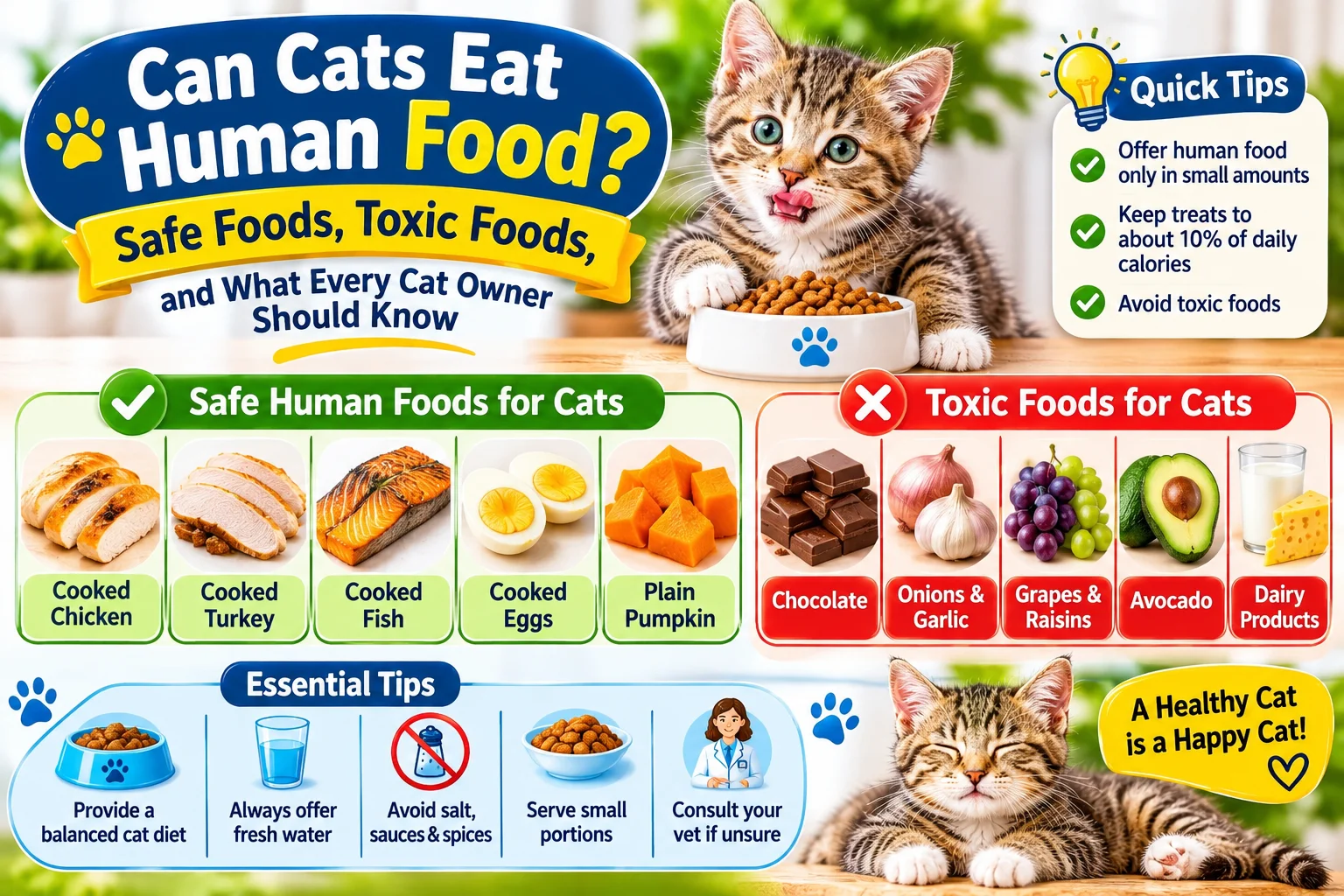
Some plain foods prepared for human consumption can be offered as occasional treats. Examples include fully cooked chicken, turkey, certain types of fish, and small amounts of selected vegetables or fruits.
However, human food should never replace a complete and balanced feline diet. Even foods that are safe for cats may become unsuitable when offered in excessive quantities.
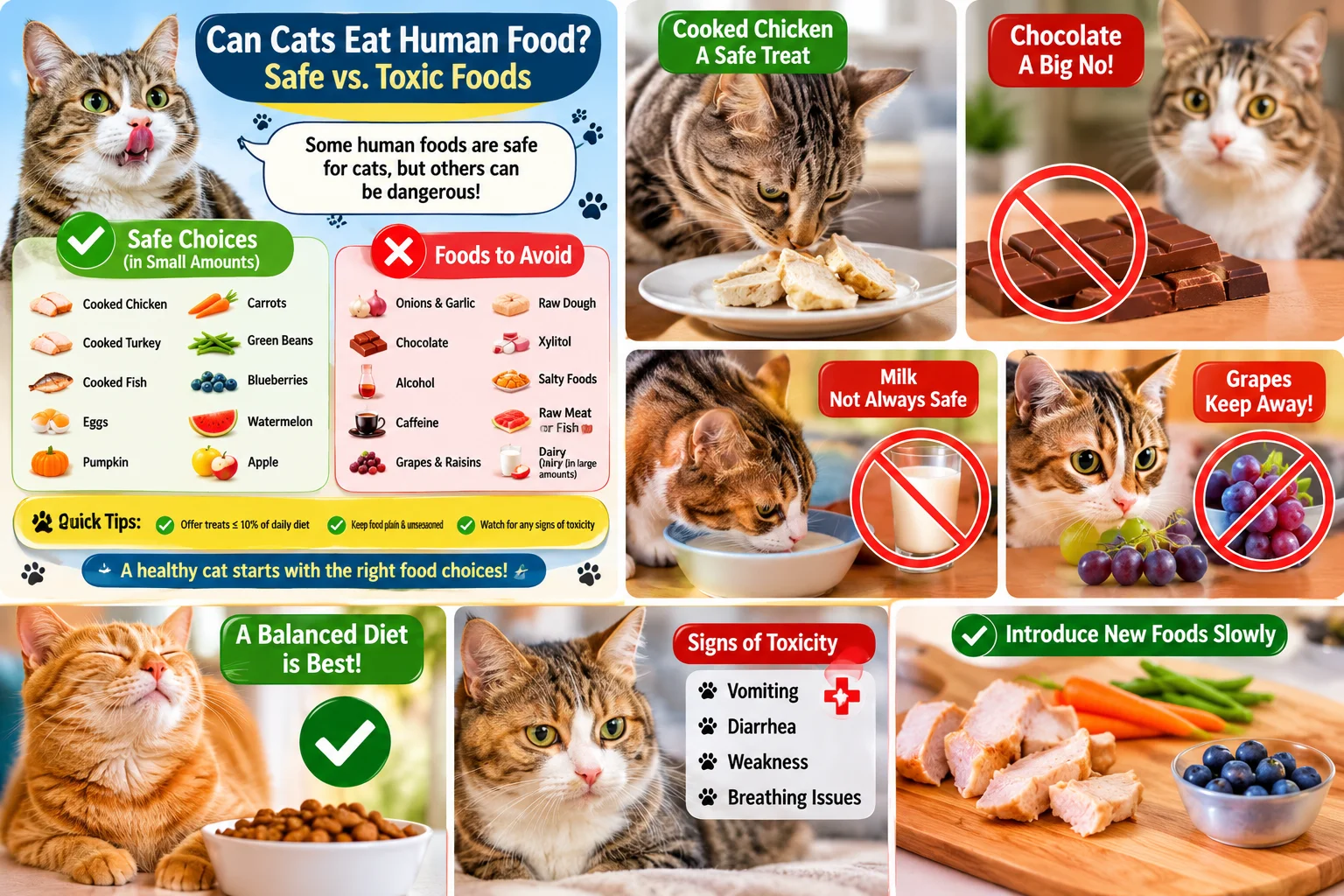
A useful general guideline is to keep treats, including human foods, to no more than approximately 10% of your cat’s daily calorie intake. The remaining calories should come from a nutritionally complete diet appropriate for your cat’s age and health.
Safe Human Foods Cats Can Eat
Several familiar foods can be suitable for cats when they are prepared without harmful ingredients and served in small portions. Remember that cats have individual preferences and digestive sensitivities, so introduce unfamiliar foods gradually.
1. Plain Cooked Chicken
Plain, fully cooked chicken is one of the simplest human foods you can offer your cat as an occasional treat. It provides animal protein and is generally well tolerated by many healthy cats.
Before serving chicken, make sure it is thoroughly cooked and prepared without ingredients that may be harmful to cats.
- Remove all bones, including small fragments.
- Remove the skin if it is fatty or heavily seasoned.
- Avoid garlic, onion, salt, sauces, and spices.
- Cut the meat into small, manageable pieces.
Boiled, baked, or otherwise plainly cooked chicken is preferable to fried or heavily seasoned preparations. Never offer raw chicken as a casual treat because uncooked poultry may carry harmful bacteria and other pathogens.
2. Plain Cooked Turkey
Fully cooked turkey can also be an occasional source of animal protein for cats. Choose plain, boneless meat without added seasonings, sauces, stuffing, or gravy.
Avoid deli turkey, smoked turkey, and other processed products. These foods may contain substantial amounts of sodium, preservatives, onion powder, garlic powder, or other ingredients that are unsuitable for cats.
Offer only a small portion and make sure the meat has cooled to a safe temperature before serving.
3. Fully Cooked Fish
Some cats enjoy the smell and taste of fish. Plain, fully cooked salmon or boneless white fish may be offered occasionally when prepared correctly.
Follow these precautions:
- Remove all bones carefully before serving.
- Cook the fish thoroughly.
- Do not add butter, oil, garlic, salt, or sauces.
- Serve a small portion rather than a full meal.
- Avoid making fish a regular substitute for balanced cat food.
Fish provides protein, but it does not automatically supply every nutrient a cat needs. Some fish products may also contain excessive salt or other additives. A complete and balanced cat food should remain the foundation of your pet’s diet.
4. Fully Cooked Eggs
Plain, fully cooked eggs can provide additional protein and may be suitable as an occasional treat. Small amounts of boiled or scrambled egg can be offered if they are prepared without extra ingredients.
Avoid adding butter, milk, cheese, salt, onions, or seasoning. Raw eggs are not recommended because they may carry bacteria and contain avidin, a protein that can interfere with biotin absorption when consumed regularly.
Always allow cooked eggs to cool before offering a small portion to your cat.
5. Plain Pumpkin
Plain cooked pumpkin or unsweetened pumpkin puree may be suitable for some cats in small quantities. Pumpkin contains dietary fiber and is sometimes used as part of veterinary dietary guidance for particular digestive concerns.
Choose plain pumpkin without added sugar, salt, spices, or other ingredients. Pumpkin pie filling is not an appropriate substitute because it may contain sweeteners and seasonings.
Although pumpkin may be useful in some situations, it is not a universal treatment for constipation or diarrhea. Contact your veterinarian if digestive symptoms persist or your cat appears uncomfortable.
6. Cooked Carrots
Plain, thoroughly cooked carrots can be offered in very small amounts. Cooking softens the vegetable, making it easier for a cat to chew and swallow.
Cut carrots into small pieces and serve them without butter, oil, salt, garlic, or seasoning. Avoid raw, hard pieces that may be difficult for your cat to chew.
Carrots are not an essential part of feline nutrition, so there is no need to add them to your cat’s regular meals.
7. Plain Green Beans
Cooked green beans may be an occasional treat for some cats. They should be soft, cut into small pieces, and served without added salt, sauces, butter, or seasoning.
Avoid canned green beans with added sodium or flavorings. Although green beans contain fiber, they cannot replace the animal-based nutrients that cats require.
8. Small Amounts Of Certain Fruits
Cats do not need fruit in their diets, but some varieties can be offered in tiny portions as occasional treats. Always remove unsafe parts, wash the fruit, and prepare it in a way that reduces choking risks.
Examples include:
- Blueberries: Wash thoroughly and offer a small amount. Crush larger berries if necessary to make them easier to eat.
- Watermelon: Offer only a small piece of fresh flesh after removing the rind and seeds.
- Apples: Serve tiny pieces of flesh after removing the core and seeds completely.
- Strawberries: Wash the fruit, remove the leaves, and cut it into small pieces.
Fruit contains natural sugars and provides no essential nutritional benefit that cats cannot obtain from an appropriate feline diet. Avoid sweetened, canned, or syrup-packed fruit, and do not force your cat to eat fruit if it shows no interest.
Human Foods That Are Toxic Or Unsafe For Cats
Some everyday ingredients can be dangerous to cats, even when they are included in meals that appear harmless to people. Depending on the substance and amount consumed, exposure may cause digestive problems, damage to red blood cells, neurological symptoms, or other serious complications.
The following foods and ingredients should be kept away from cats.
1. Onions, Garlic, Chives, And Leeks
Onions, garlic, chives, leeks, and related plants belong to the Allium family. They contain compounds that can damage red blood cells and potentially cause hemolytic anemia in cats.
These ingredients are unsafe in several forms, including:
- Raw onions and garlic.
- Cooked onions and garlic.
- Dried or powdered seasonings.
- Foods containing onion or garlic extracts.
Be especially careful with soups, sauces, gravies, meat seasonings, baby foods, and prepared meals. Onion or garlic powder may be present even when the food does not visibly contain pieces of these ingredients.
Do not offer leftovers unless you know exactly what they contain.
2. Chocolate And Cocoa Products
Chocolate contains theobromine and caffeine, two methylxanthine compounds that can be toxic to cats.
Dark chocolate, baking chocolate, and cocoa powder are particularly concerning because they may contain higher concentrations of these substances than some other chocolate products.
Possible signs of chocolate poisoning include vomiting, restlessness, increased heart rate, tremors, and seizures.
Keep chocolate bars, cocoa powder, chocolate desserts, and baking ingredients securely stored away from pets. Contact a veterinarian immediately if your cat consumes chocolate.
3. Alcohol
Alcohol is toxic to cats and can affect the nervous system, breathing, blood sugar, and body temperature. Cats are much smaller than people, so even relatively small exposures may be dangerous.
Never allow your cat to drink beer, wine, spirits, or other alcoholic beverages. Keep alcohol-containing foods and liquids out of reach as well.
If you suspect alcohol exposure, seek veterinary advice immediately rather than waiting for symptoms to appear.
4. Caffeine
Coffee, tea, energy drinks, and caffeine supplements can be harmful to cats. Caffeine stimulates the nervous system and cardiovascular system and may cause serious reactions depending on the amount consumed.
Keep the following products away from your cat:
- Coffee and espresso.
- Tea and tea bags.
- Energy drinks.
- Caffeine tablets and supplements.
- Coffee grounds and concentrated coffee products.
Do not assume that a small spill or discarded tea bag is harmless. Contact a veterinarian if your cat may have swallowed a caffeinated product.
5. Grapes And Raisins
Grapes and raisins are best avoided entirely. Their potential toxicity in cats is not as well established as it is in dogs, but there is insufficient evidence to consider them safe.
Because the possible risks are not fully understood, there is no reason to offer these foods as treats.
Keep fresh grapes, dried raisins, baked goods containing raisins, and fruit mixtures out of your cat’s reach. Contact your veterinarian if your cat consumes them.
6. Raw Yeast Dough
Raw dough containing active yeast can create two important risks. First, it may continue expanding inside the digestive tract. Second, fermentation produces alcohol, which can lead to alcohol poisoning.
Keep rising dough covered and stored where your cat cannot reach it. Never allow your pet to investigate or taste unbaked bread dough.
If ingestion occurs, contact a veterinarian immediately.
7. Foods Containing Xylitol
Xylitol is a sweetener used in some sugar-free products, chewing gums, sweets, and baked goods.
Its effects in cats are less clearly established than in dogs, so it should not be described as having the same documented toxicity profile in both species. Nevertheless, products containing xylitol should not be offered to cats.
Keep sugar-free products away from pets and contact your veterinarian if your cat consumes a product containing this sweetener.
8. Excessively Salty Foods
Large quantities of salt can be harmful to cats. Excessive sodium intake may cause salt poisoning, particularly when a pet consumes a concentrated or unusually salty product.
Avoid sharing foods such as:
- Salted chips and pretzels.
- Heavily seasoned meats.
- Processed and cured meats.
- Very salty sauces and snacks.
- Foods preserved with large amounts of salt.
These products may also contain onion, garlic, preservatives, or other ingredients that make them unsuitable for cats.
Can Cats Drink Milk Or Eat Dairy Products?
The image of a cat drinking a bowl of milk is familiar, but regular cow’s milk is not an ideal drink for most adult cats.
Many cats become less able to digest lactose as they grow older. Lactose is the natural sugar found in milk, and insufficient lactase activity can lead to digestive discomfort after consuming dairy products.
Possible reactions include:
- Diarrhea.
- Gas and bloating.
- Abdominal discomfort.
- Vomiting in some cases.
Cheese, cream, yogurt, and other dairy products are also unnecessary for feline nutrition. Their lactose content varies, but they may still contain considerable fat and calories.
Fresh, clean drinking water should always be your cat’s main source of hydration. If you want to offer a special milk-style treat, choose a product specifically formulated for cats and ask your veterinarian whether it is appropriate.
Can Cats Eat Raw Meat Or Raw Fish?
Cats are natural carnivores, but their evolutionary background does not make every raw animal product safe. Raw meat and fish may contain bacteria, parasites, and other pathogens that can cause illness in pets and potentially expose people in the household.
Raw feeding also requires careful nutritional planning. Simply offering uncooked meat does not guarantee that a cat receives the correct balance of essential nutrients.
Raw fish presents additional concerns. Certain fish contain thiaminase, an enzyme that breaks down thiamine (vitamin B1). Regular consumption of fish containing this enzyme may contribute to thiamine deficiency if the overall diet is not properly balanced.
Bones can also create choking, injury, or digestive obstruction risks.
For occasional treats, thoroughly cooked, plain, boneless meat or fish is generally a safer choice. Cats that are fed a raw diet should have an appropriately formulated feeding plan discussed with a veterinarian.
How Much Human Food Can You Give A Cat?
Even when a food is safe, portion size matters. Human food should remain an occasional extra rather than becoming a significant part of your cat’s daily meals.
A treat that seems small to a person may represent a substantial number of calories for a small animal. Regularly sharing large portions can contribute to weight gain and nutritional imbalance.
Follow these practical guidelines:
- Start with a tiny portion: Offer only a small bite when introducing an unfamiliar food.
- Follow the 10% guideline: Keep all treats combined at approximately 10% or less of daily calorie intake.
- Keep preparation simple: Avoid salt, oils, butter, sauces, spices, and sweeteners.
- Introduce one food at a time: This makes it easier to identify a possible reaction.
- Monitor your cat: Stop offering the food if vomiting, diarrhea, or other unusual symptoms develop.
- Respect veterinary diets: Ask your veterinarian before adding treats to a prescribed feeding plan.
Kittens, senior cats, overweight cats, and animals with medical conditions may have different nutritional requirements. Their treat allowances should be considered in the context of their individual diets and health needs.
What Should You Do If Your Cat Eats Something Toxic?
If you believe your cat has eaten a potentially toxic food, contact your veterinarian or an emergency veterinary clinic immediately. Do not wait for visible symptoms before asking for professional advice.
When speaking with the veterinary team, provide as much information as possible:
- Identify the food: Explain what your cat may have eaten and provide the ingredient list if available.
- Estimate the amount: Give an approximate quantity, even if you are unsure.
- Note the timing: Explain when the exposure may have occurred.
- Describe your cat: Provide its approximate age and weight.
- Report any symptoms: Mention vomiting, diarrhea, weakness, tremors, breathing changes, or unusual behavior.
Keep the original packaging or ingredient label if possible. This information can help the veterinary team identify the substance and assess the potential risk.
Never try to make your cat vomit or administer home remedies unless a veterinarian specifically instructs you to do so. Some interventions can make the situation worse.
Possible warning signs of poisoning include vomiting, diarrhea, unusual weakness, tremors, difficulty breathing, changes in coordination, and seizures. However, some toxic exposures may not produce immediate symptoms.
Prompt veterinary advice is important even if your cat appears normal.
How To Introduce New Foods To Your Cat Safely
If you want to offer an occasional human-food treat, taking a careful approach can help reduce the risk of digestive upset and accidental exposure to harmful ingredients.
1. Check The Ingredients First
Read the ingredient list before sharing prepared food. Look for onion, garlic, excessive salt, sweeteners, sauces, seasonings, and other ingredients that may be unsuitable for cats.
When you cannot confirm what a dish contains, do not offer it.
2. Prepare The Food Properly
Cook meat and fish thoroughly, remove all bones, and avoid added oils, butter, salt, or spices. Wash fruit and vegetables and remove any parts that could present a choking or ingestion risk.
3. Begin With A Very Small Portion
Offer a tiny amount rather than a full serving. Your cat does not need to finish the food, and there is no reason to encourage it to eat something unfamiliar.
4. Watch For Changes
Observe your cat after introducing a new treat. Vomiting, diarrhea, changes in appetite, or unusual behavior may indicate that the food is not suitable or that another problem is present.
Stop offering the food if a concerning reaction occurs and contact your veterinarian when appropriate.
5. Keep Human Food Occasional
Treats should complement a complete and balanced feline diet, not replace it. Avoid creating a routine in which your cat depends on table scraps for a significant portion of its nutrition.
If your cat has food allergies, digestive disease, kidney disease, diabetes, or another medical condition, consult your veterinarian before introducing new foods.
Frequently Asked Questions About Human Foods For Cats
What human food can cats eat every day?
Cats should receive a complete and balanced diet formulated for their nutritional needs rather than relying on human food every day. Plain cooked meat may be suitable as an occasional treat, but it does not provide every nutrient a cat requires. Keep treats within approximately 10% of daily calorie intake unless your veterinarian recommends a different approach.
Can cats eat rice?
Small amounts of plain, fully cooked rice are generally not toxic to cats, but rice is not nutritionally necessary and provides little benefit to obligate carnivores. It should never replace animal-based nutrition or complete cat food. Avoid rice dishes containing onion, garlic, butter, salt, sauces, or seasonings.
Can cats eat bread?
A tiny piece of plain, fully baked bread is generally not harmful to most healthy cats, but it offers little nutritional value. Bread should not become a regular treat. Never give cats raw yeast dough, garlic bread, or bread containing chocolate, raisins, or other potentially harmful ingredients.
Can cats eat cheese?
Cheese is not an ideal treat for cats because many adult cats have difficulty digesting lactose. It may also contain substantial amounts of fat and salt. Although some cats tolerate a tiny amount, plain cooked meat or a suitable commercial cat treat is generally a better choice.
Can cats eat tuna?
Plain tuna prepared without salt, seasoning, or added oil may be offered in a small amount occasionally. However, tuna intended for human consumption is not nutritionally complete for cats and should not become their regular food. Choose an appropriate complete cat food as the main source of nutrition.
Are bananas safe for cats?
A tiny piece of peeled banana is generally considered non-toxic to cats, but bananas contain natural sugars and do not provide essential feline nutrients. If your cat enjoys banana and tolerates it, offer only a very small amount occasionally.
What is the most dangerous human food for cats?
There is no single food that is always the most dangerous because the risk depends on the ingredient, amount consumed, and individual cat. Onions and garlic, chocolate, alcohol, and caffeine are important hazards. Any suspected exposure to a potentially toxic ingredient should be discussed with a veterinarian immediately.
Can cats eat vegetables and fruit?
Some plain vegetables and selected fruits can be offered in tiny portions if they are prepared safely. Examples include cooked carrots, green beans, blueberries, and seedless watermelon flesh. However, cats do not need fruit or vegetables to meet their essential nutritional requirements. Avoid toxic ingredients and keep these foods occasional.
Final Thoughts: Choosing Safe Human Food For Cats
Sharing an occasional treat with your cat can be an enjoyable experience, but its health and nutritional needs should always come first. Some plain cooked meats, selected vegetables, and small portions of certain fruits may be suitable additions to an otherwise balanced diet.
Other ingredients, including onions, garlic, chocolate, alcohol, and caffeine, should never be offered. Foods that appear harmless or healthy to people can create risks for cats because their digestive systems and nutritional requirements are different.
The safest approach is to keep your cat’s main diet complete and balanced, check ingredients carefully, introduce unfamiliar foods gradually, and avoid giving table scraps simply because your cat asks for them.
If you are unsure whether a particular food is safe, consult your veterinarian before sharing it.
For more practical advice about feline nutrition, grooming, behavior, and everyday care, explore our Complete Cat Care Guide.