Table of Contents
- How To Potty Train A Puppy: A Beginner-Friendly Step-by-Step Guide
- When Should You Start Potty Training A Puppy?
- How Often Should You Take A Puppy Outside?
- Step-by-Step Guide To Potty Training A Puppy
- How To Potty Train A Puppy At Night
- Can Crate Training Help With Potty Training?
- How To Handle Potty Training Accidents In Puppies
- Common Potty Training Mistakes To Avoid
- How Long Does Potty Training Take?
- Frequently Asked Questions
- What Is The Best And Fastest Way To Potty Train A Puppy?
- Puppy Pads Vs. Outdoor Potty Training: Which Is Best For Your Puppy?
- Should You Wake Your Puppy At Night For Potty Breaks?
- Why Does My Puppy Keep Having Accidents And Peeing Indoors?
- Can I Potty Train An Older Dog?
- When Should I Contact A Veterinarian?
- Final Thoughts
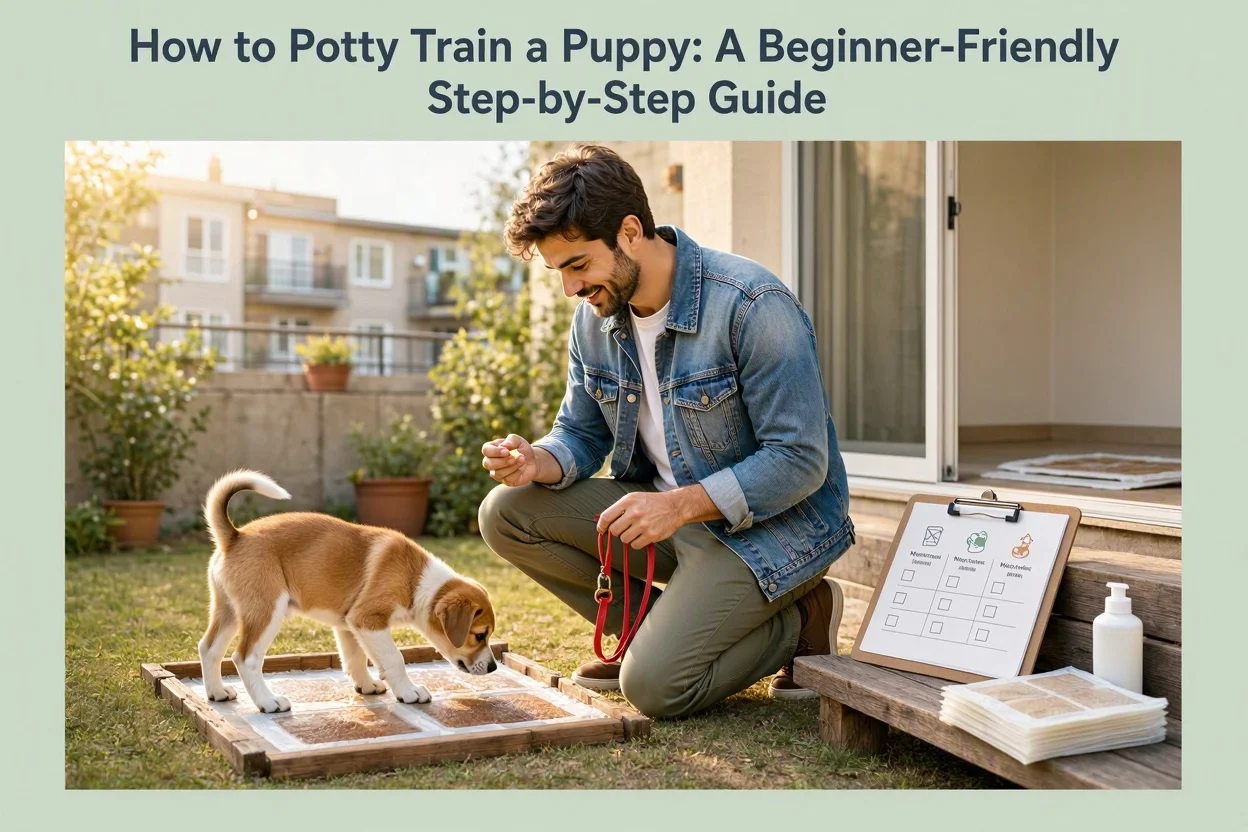
How To Potty Train A Puppy: A Beginner_Friendly Step_by_Step Guide
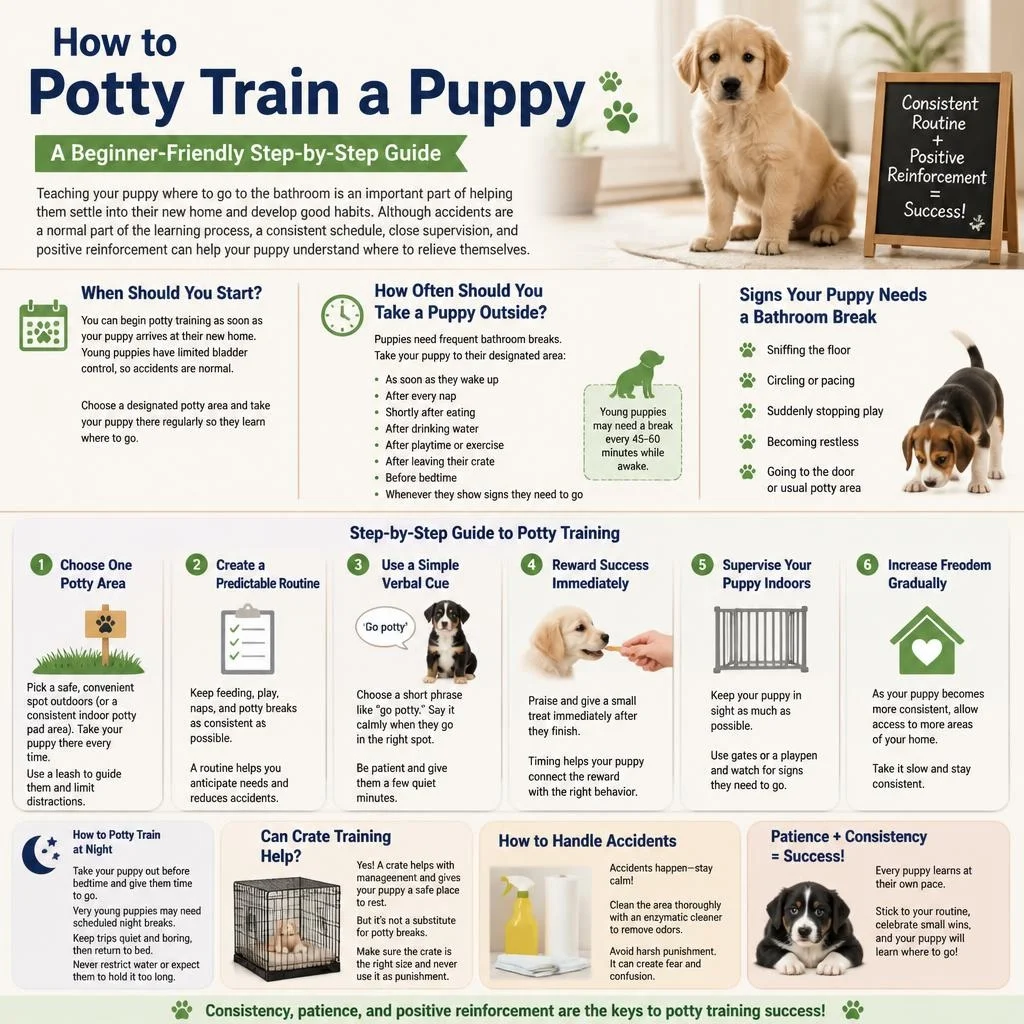
Teaching your puppy where to go to the bathroom is an important part of helping them settle into their new home and develop good habits. Although accidents are a normal part of the learning process, a consistent schedule, close supervision, and positive reinforcement can help your puppy understand where to relieve themselves.
For first-time dog owners, the key is to make the right behavior easy to repeat. Take your puppy to the designated potty area regularly, reward them immediately when they succeed, and remain calm when accidents happen. Every puppy learns at a different pace, so patience and consistency are essential throughout the process.
In this guide, you’ll learn how to potty train a puppy, establish a daily routine, recognize signs that your puppy needs to go, and handle common training challenges without punishment.
A consistent routine and positive reinforcement can help your puppy
develop reliable bathroom habits.
When Should You Start Potty Training A Puppy?
You can begin potty training as soon as your puppy arrives at their new home. Young puppies have limited bladder control, which means they need frequent bathroom breaks. Indoor accidents are a normal part of learning where they should relieve themselves.
Start by choosing a designated potty area. If you plan to train your puppy to go outdoors, take them to the same safe spot each time. Repeated visits can help them become familiar with the location and understand where they are expected to go.
If regular outdoor access is difficult, such as when you live in an apartment, puppy pads or another suitable indoor potty area may be an alternative.
Keep your expectations realistic during the early stages. The goal is to establish a routine and help your puppy understand the correct place to go, rather than expecting perfect behavior immediately.
How Often Should You Take A Puppy Outside?
Puppies generally need more frequent bathroom breaks than adult dogs because their bladder control is still developing. The right potty schedule depends on your puppy’s age, size, activity level, feeding routine, and individual needs.
To make potty training easier, take your puppy to their designated area at these important times throughout the day:
- As soon as they wake up in the morning.
- After every nap.
- Shortly after eating.
- After drinking water, especially when they drink a large amount.
- After playtime, exercise, or exciting activities.
- Immediately after leaving their crate or enclosed resting area.
- Before bedtime.
- Whenever they show signs that they need to relieve themselves.
Very young puppies may need a potty break every 45–60 minutes while awake. Some may need to go even more frequently, depending on their age and individual needs. Pay attention to your puppy’s behavior and adjust the schedule rather than relying on a strict timetable.
Avoid expecting a young puppy to hold their bladder for long periods. Their bladder control is still developing, and they need regular opportunities to go. If you cannot provide frequent breaks yourself, arrange for a responsible person to help.
Step_by_Step Guide To Potty Training A Puppy
Step 1: Choose One Potty Area
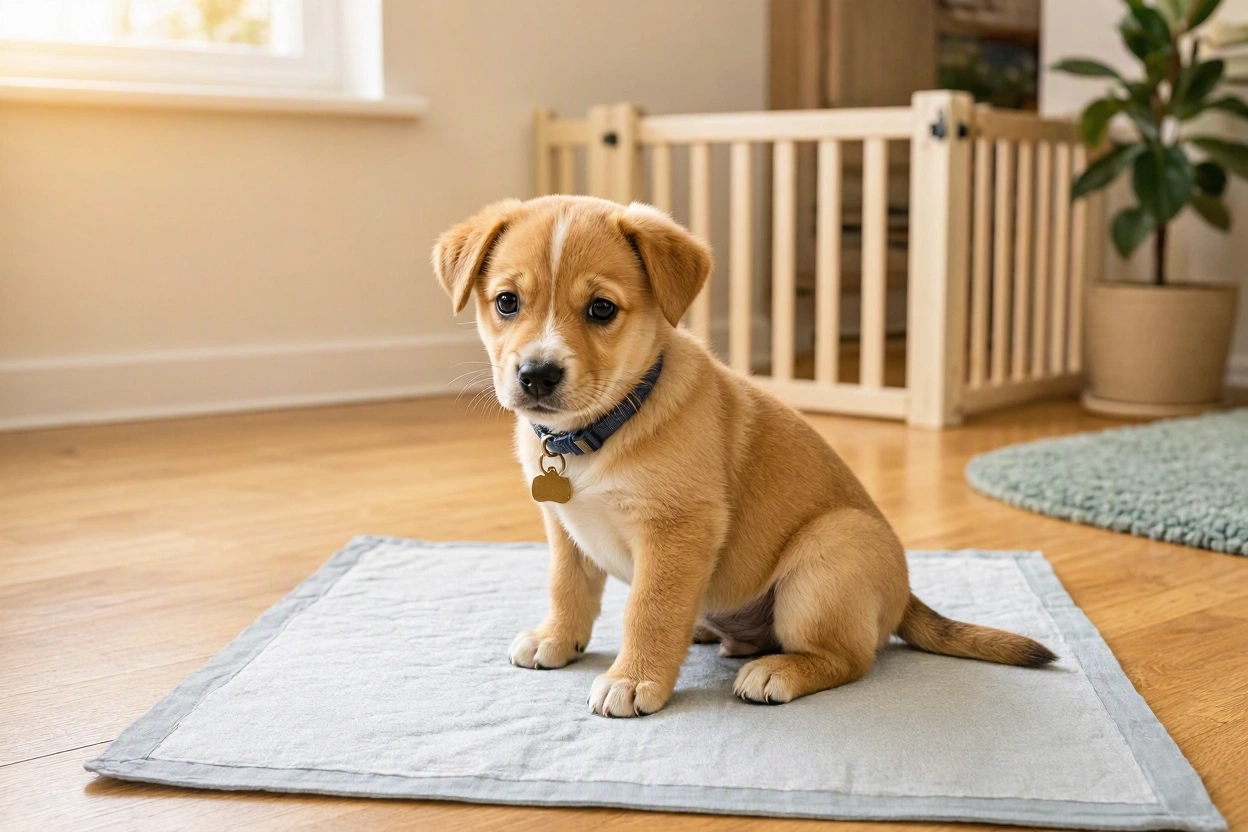
Choose a safe, convenient, and consistent place where your puppy can go to the bathroom. If you’re training them to potty outdoors, take them to the same designated spot during each bathroom break. This consistency can help them recognize the area and develop reliable habits.
You can keep your puppy on a leash when guiding them to the potty area. This helps you direct them to the correct spot and limits distractions.
If you’re using puppy training pads indoors, place them in one designated location and keep them there. Having a consistent potty area makes it easier for your puppy to learn where to go.
Step 2: Create A Predictable Daily Routine
A regular daily routine makes it easier to anticipate when your puppy needs a bathroom break and can help reduce indoor accidents. Try to keep feeding times, naps, play sessions, and potty breaks as consistent as possible.
The following morning routine is a simple way to establish good potty-training habits:
- Take your puppy to their designated potty area immediately after they wake up.
- Give them breakfast according to your regular feeding schedule.
- Take them back to the potty area shortly after eating.
- Allow some supervised playtime and exploration.
- Offer another potty break after playtime or a nap to help prevent accidents.
Repeat this general pattern throughout the day, adding bathroom breaks whenever your puppy needs them.
Step 3: Use A Simple Verbal Cue
Choose a short verbal cue, such as “go potty” or “go to the toilet.” Say it calmly when your puppy begins relieving themselves in the designated area.
With regular practice, your puppy can learn to associate the phrase with bathroom time. Avoid repeating the cue too frequently or putting pressure on your puppy. Learning takes time, and patience and positive reinforcement are important.
Give your puppy a few quiet minutes to sniff around and become familiar with the potty area. If they don’t go, bring them back inside and supervise them closely before trying again a little later.
Step 4: Reward Success Immediately
When your puppy finishes going to the bathroom in the correct area, praise them and offer a small treat. This positive response helps reinforce the behavior you want them to repeat.
Timing is important. Give praise and the treat immediately after your puppy finishes so they can associate the reward with using the designated potty area.
Step 5: Supervise Your Puppy Indoors
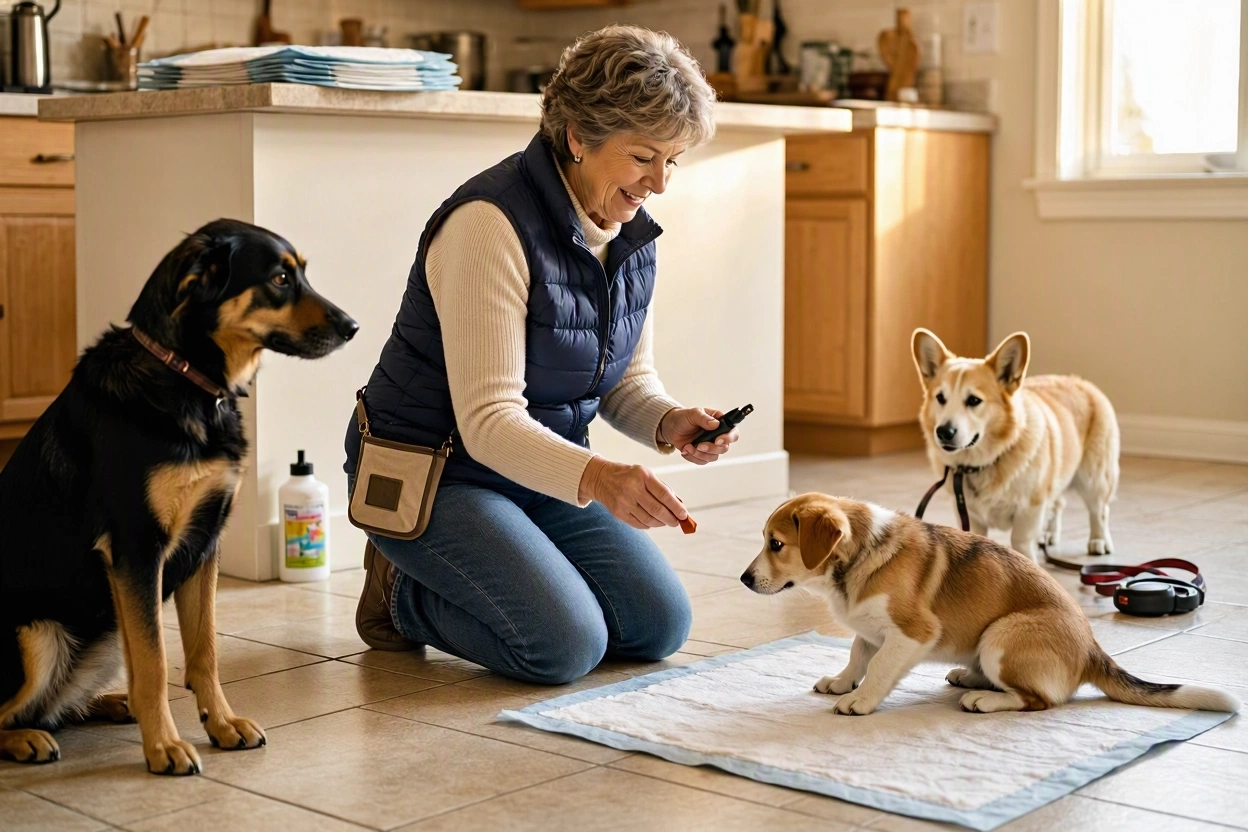
During the early stages of potty training, keep your puppy within sight as much as possible. Close supervision helps you notice when they need to go and reduces the chances of accidents around the house.
Baby gates, a puppy-safe playpen, or a small supervised area can help limit your puppy’s access to the home while they are still learning.
Watch for common signs that your puppy may need a bathroom break, including:
- Sniffing the floor repeatedly.
- Circling or pacing around.
- Suddenly stopping during play.
- Becoming restless or returning to a place where they previously had an accident.
- Moving toward the door or their usual potty area.
These signs may not always be easy to recognize, especially at first. That’s why regular scheduled potty breaks remain important, even when your puppy doesn’t clearly signal that they need to go.
Step 6: Increase Freedom Gradually
As your puppy becomes more consistent with their potty habits, gradually allow them access to additional areas of your home. Continue supervising them closely as their freedom increases.
Maintain the established schedule and keep watching for signs that they need a bathroom break. If accidents become more frequent, temporarily limit their access to the home and offer more frequent potty opportunities.
Remember that progress may vary from one day to another. A setback doesn’t mean your puppy has forgotten their training. It may simply mean that their routine needs some adjustment.
How To Potty Train A Puppy At Night
Nighttime potty training can take longer because young puppies often don’t have enough bladder control to wait until morning.
Before putting your puppy to bed, take them to their designated potty area and give them enough time to relieve themselves. Very young puppies may also need scheduled bathroom breaks during the night because their bladder control is still developing.
If your puppy wakes up and seems restless, calmly take them to their potty area. Keep the trip quiet and free from distractions, then guide them back to bed and continue with their usual nighttime routine.
As your puppy grows and becomes more reliable, nighttime bathroom breaks may become less frequent. Never restrict your puppy’s access to water or expect them to hold their bladder longer than they comfortably can just to avoid nighttime trips.
Can Crate Training Help With Potty Training?
A properly introduced crate can support potty training by giving your puppy a comfortable place to rest and helping you manage their environment when you cannot supervise them directly.
Choose a crate that gives your puppy enough room to stand up, turn around, and lie down comfortably. Introduce it gradually and help your puppy develop positive associations with it. Never use the crate as punishment for unwanted behavior.
However, crate training does not replace regular potty breaks. Puppies still need frequent opportunities to relieve themselves, so avoid keeping them confined longer than they can reasonably manage. Very young puppies may need frequent bathroom trips, including during the night.
If your puppy repeatedly has accidents inside the crate, review their potty-break schedule and check that the crate is appropriately sized and comfortable. If the problem continues or seems unusual, consult a veterinarian to check for possible underlying health issues.
How To Handle Potty Training Accidents In Puppies
Accidents are a normal part of the potty-training process. If you discover one, stay calm and clean the area thoroughly to remove any remaining odors.
If you catch your puppy beginning to go indoors, gently interrupt them without frightening them. If possible, guide them to their designated potty area. Praise them and offer positive reinforcement if they finish there.
If you find an accident after it has already happened, avoid scolding your puppy. They are unlikely to understand that punishment after the event is connected to the behavior you wanted to prevent.
Use a pet-safe enzymatic cleaner according to its label instructions to help remove lingering odors. Cleaning the affected area thoroughly can reduce the likelihood of your puppy returning to the same spot.
If indoor accidents continue, review your potty-training routine. Your puppy may need more frequent bathroom breaks, closer supervision, or a more consistent daily schedule.
Common Potty Training Mistakes To Avoid
1. Waiting For Your Puppy To Ask
Some puppies learn to signal when they need a bathroom break, while others take longer to develop reliable signals. During the early stages of training, continue offering regular potty breaks instead of waiting for your puppy to ask.
2. Changing The Routine Too Often
Irregular feeding times and inconsistent bathroom breaks can make it harder to recognize your puppy’s needs. Keep the daily schedule as predictable as possible.
3. Giving Too Much Freedom Too Soon
When puppies have access to the entire house before they develop reliable potty habits, they may find quiet corners to use as a bathroom. Expand their access gradually as their consistency improves.
4. Punishing Accidents
Shouting, frightening your puppy, or rubbing their nose in a mess can create fear and make training more difficult. Focus on preventing accidents, calmly redirecting your puppy to the correct potty area, and rewarding successful bathroom trips.
5. Expecting Immediate Results
Some puppies develop reliable potty habits within a few weeks, while others may need several months of consistent practice and positive reinforcement. Your puppy’s age, health, previous experiences, and living environment can all influence how quickly they learn.
6. Ignoring Possible Health Problems
Frequent accidents aren’t always caused by training difficulties. If your puppy suddenly starts having accidents, strains to urinate, has blood in their urine, develops diarrhea, or appears unwell, contact a veterinarian.
How Long Does Potty Training Take?
Potty training takes a different amount of time for every puppy. Some learn the routine within a few weeks, while others need several months of regular practice. Patience, consistency, and positive reinforcement are essential for developing dependable bathroom habits.
You can recognize progress when your puppy uses the designated potty area more consistently, has fewer indoor accidents, and begins showing signs that they need to go.
Continue following the routine even after your puppy starts improving. Reliable habits develop through repetition, and occasional accidents may still happen when schedules or environments change.
Frequently Asked Questions
What Is The Best And Fastest Way To Potty Train A Puppy?
The most effective approach is to offer frequent potty breaks, supervise your puppy closely, use one consistent potty area, and reward successful bathroom trips immediately. Use positive reinforcement instead of punishment, and never expect your puppy to hold their bladder for too long.
Puppy Pads Vs. Outdoor Potty Training: Which Is Best For Your Puppy?
The best choice depends on your living situation and training goals. Outdoor potty training establishes a clear bathroom routine, while puppy pads provide a convenient indoor option when regular outdoor access is difficult. If you want to transition from puppy pads to outdoor potty training, make the change gradually and reward your puppy for using the new location.
Should You Wake Your Puppy At Night For Potty Breaks?
Young puppies often need bathroom breaks during the night because their developing bladders may not allow them to wait until morning. How often they need to go depends on their age and individual needs. Keep nighttime trips calm and quiet, then gradually adjust the routine as your puppy grows and develops better bladder control.
Why Does My Puppy Keep Having Accidents And Peeing Indoors?
Possible reasons include an inconsistent routine, too few bathroom breaks, too much unsupervised freedom, stress, or an underlying medical issue. Start by reviewing your puppy’s schedule and supervision. If accidents begin suddenly, continue despite consistent training, or occur alongside other symptoms, contact your veterinarian.
Can I Potty Train An Older Dog?
Yes. Older puppies and adult dogs can learn new bathroom habits. Establish a regular routine, supervise your dog closely, and reward them when they use the correct potty area. Handle accidents calmly without punishment. Dogs that continue having indoor accidents may need additional training time, consistent routines, and professional guidance.
When Should I Contact A Veterinarian?
Seek veterinary advice if your puppy struggles to urinate, has blood in their urine, experiences ongoing diarrhea or excessive thirst, develops sudden changes in bathroom habits, or continues having indoor accidents despite a consistent training routine. These signs may point to an underlying medical condition that needs veterinary attention rather than further training adjustments.
Final Thoughts
Potty training your puppy takes patience, consistency, and an approach that suits their individual needs. Start by choosing a designated potty area, offering frequent bathroom breaks, supervising your puppy closely, and rewarding success immediately.
Treat accidents as opportunities to review and adjust your routine rather than reasons to punish your puppy. With regular practice, realistic expectations, and a positive approach, you can help your puppy develop dependable bathroom habits and settle more comfortably into their new home.
For more advice on feeding, grooming, training, and everyday dog care, explore our complete guide to caring for your dog. If you’re still preparing to welcome a dog, our guide to the best dog breeds for first-time owners can help you understand the responsibilities of dog ownership.