Table of Contents
- Why Do Cats Scratch Furniture? How To Stop It Without Punishment
- Why Do Cats Scratch Furniture?
- Why Does My Cat Ignore Its Scratching Post And Target The Sofa?
- How To Redirect Your Cat's Scratching Away From Furniture
- 1. Match The Scratching Equipment To Your Cat's Habits
- 2. Position The New Scratcher Along Your Cat's Usual Route
- 3. Turn The Scratching Area Into An Interesting Part Of The Home
- 4. Reduce Access To Vulnerable Furniture During The Transition
- 5. Give Your Cat More Opportunities To Stay Active Indoors
- 6. Associate Appropriate Scratching With Positive Experiences
- Which Scratching Surface Should You Choose For Your Cat?
- How Many Scratching Areas Should You Provide?
- Can Trimming Your Cat's Claws Protect Furniture?
- Habits To Avoid When Managing Furniture Scratching
- When Does A Change In Scratching Behavior Need Veterinary Attention?
- Frequently Asked Questions About Cats Scratching Furniture
- Final Thoughts: Create A Better Scratching Environment For Your Cat
- References
Why Do Cats Scratch Furniture? How To Stop It Without Punishment
Discovering claw marks on your sofa, dining chairs, carpets, or curtains can be disappointing, particularly when your cat keeps returning to the same pieces of furniture. However, cats scratching furniture is not deliberate destruction. It is a normal feline activity connected to claw maintenance, muscle movement, communication, and interaction with the surrounding environment.
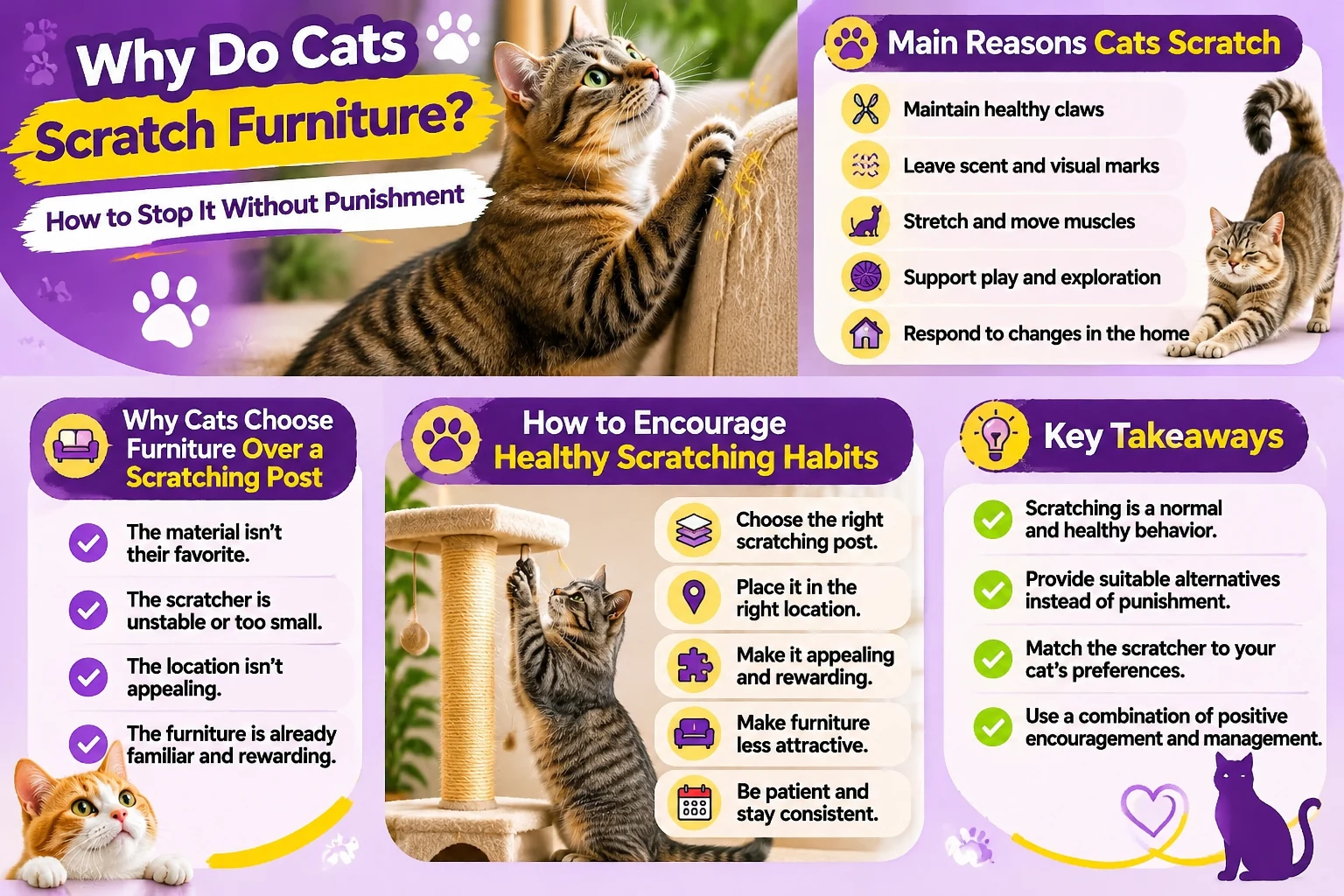
The solution is not to prevent your cat from scratching altogether. Instead, the aim is to provide more suitable places where this behavior can take place while making household furniture less attractive as a scratching target.
From understanding your cat’s scratching preferences to selecting appropriate scratching equipment, a few carefully planned changes can help protect your home. This guide explores the reasons behind furniture scratching and explains practical, positive ways to encourage healthier scratching habits.
Why Do Cats Scratch Furniture?
Scratching is an important part of everyday feline behavior. It serves several purposes, and cats may choose different surfaces depending on their physical needs, surroundings, and individual preferences.
1. Scratching Supports Natural Claw Maintenance
Cat claws grow continuously and develop new layers over time. Scratching helps loosen and remove worn outer claw sheaths, allowing the newer claw underneath to emerge.
This process explains why cats repeatedly use surfaces with different textures, from rough cardboard and sisal to wood, carpet, and upholstered furniture.
Providing suitable scratching equipment gives your cat an appropriate place to carry out this natural claw-maintenance activity.
2. Scratching Helps Cats Communicate Through Scent And Visual Marks
For cats, scratching is more than a physical activity. It also leaves recognizable signals within their living environment.
Their paws contain scent-producing glands, so contact with a scratching surface can deposit familiar chemical signals. At the same time, the marks left behind provide visible evidence of their presence.
Furniture positioned near entrances, windows, and frequently visited areas may become an appealing marking location. This can explain why certain corners of a home receive repeated attention.
3. Scratching Allows Cats To Stretch And Move Their Muscles
When a cat reaches upward and pulls against a firm surface, several muscle groups become involved. The movement engages the front legs, shoulders, and back while allowing the animal to extend its body.
This activity is often noticeable after a nap or a period of inactivity. A suitable scratching surface provides an opportunity for comfortable stretching as part of a cat’s normal movement routine.
4. Scratching Is Connected To Play And Environmental Exploration
Curiosity and physical activity are important parts of feline life. Cats investigate objects, climb, chase moving toys, and interact with different surfaces throughout the day.
Scratching can occur naturally during these activities, especially when a cat becomes energetic or interested in something nearby.
An environment with limited opportunities for exploration may leave furniture as one of the few available objects that provides an interesting physical activity. Climbing equipment, toys, and dedicated scratchers can offer more appropriate alternatives.
5. Changes In The Household May Influence Scratching Habits
A cat’s surroundings play an important role in its daily behavior. Relocation, unfamiliar animals, changes in household schedules, or frequent visitors can alter how a cat interacts with its environment.
During periods of adjustment, a cat may revisit familiar scratching locations or change its usual activity patterns. These behaviors can be associated with environmental uncertainty, although scratching alone does not establish that an animal is experiencing stress.
Pay attention to other changes, including reduced appetite, unusual hiding, withdrawal, or altered activity. If several changes occur together, a veterinary assessment can help determine whether an underlying problem is present.
Why Does My Cat Ignore Its Scratching Post And Target The Sofa?
Even when a scratching post is available, your cat may still choose the sofa as its preferred place to sharpen its claws and stretch. This often happens because the furniture offers something the alternative lacks, whether it is a familiar surface, a more comfortable scratching angle, or a location your cat naturally gravitates toward.
Understanding these preferences can help you introduce an option that better suits your cat’s habits.
The Scratching Material Does Not Match Your Cat’s Preference
Different cats respond to different surface qualities. One may enjoy pulling its claws through tightly woven sisal, while another may repeatedly choose corrugated cardboard or a rough carpet-like material.
When a newly purchased scratcher feels unfamiliar compared with the upholstery your cat already enjoys, the furniture may remain its preferred choice.
Offering a selection of textures can help reveal which material your cat is most willing to use.
The Scratching Equipment Cannot Support Your Cat’s Movement
Some scratching structures are not designed to withstand the pressure created when a cat leans forward, pulls downward, or extends its body. If the base shifts across the floor or the upper section bends during use, the entire structure may feel unsuitable.
Look for a firmly constructed model with a broad supporting base and enough vertical space for your cat to reach upward without restriction. The equipment should remain steady throughout the scratching movement.
The Scratching Surface Is Not Where Your Cat Wants It
A scratching board can be perfectly suitable yet remain unused if it is placed somewhere your cat rarely visits.
Cats often return to familiar locations when interacting with their surroundings. A living-room sofa, for example, may be more attractive than a scratcher positioned in a quiet storage area.
Consider your cat’s daily routes, resting places, and preferred activity areas when deciding where to install scratching equipment.
Your Cat May Be More Comfortable Scratching On The Floor
Vertical structures are not the only option available. Some cats naturally lower their bodies and work their claws across a surface positioned close to the ground.
If carpets and rugs receive most of your cat’s attention, introduce a flat cardboard board or a suitable horizontal scratching mat. An angled model can also provide a useful alternative for cats that do not consistently choose either position.
How To Redirect Your Cat’s Scratching Away From Furniture
Changing an established scratching habit requires a combination of environmental adjustments and consistent encouragement. Rather than correcting your cat after every unwanted scratch, make appropriate surfaces easier to access and more rewarding to use.
1. Match The Scratching Equipment To Your Cat’s Habits
Before choosing a replacement for damaged furniture, identify the characteristics of the surfaces your cat repeatedly selects. Consider the direction of its movements, the height it reaches, and the material that receives the most attention.
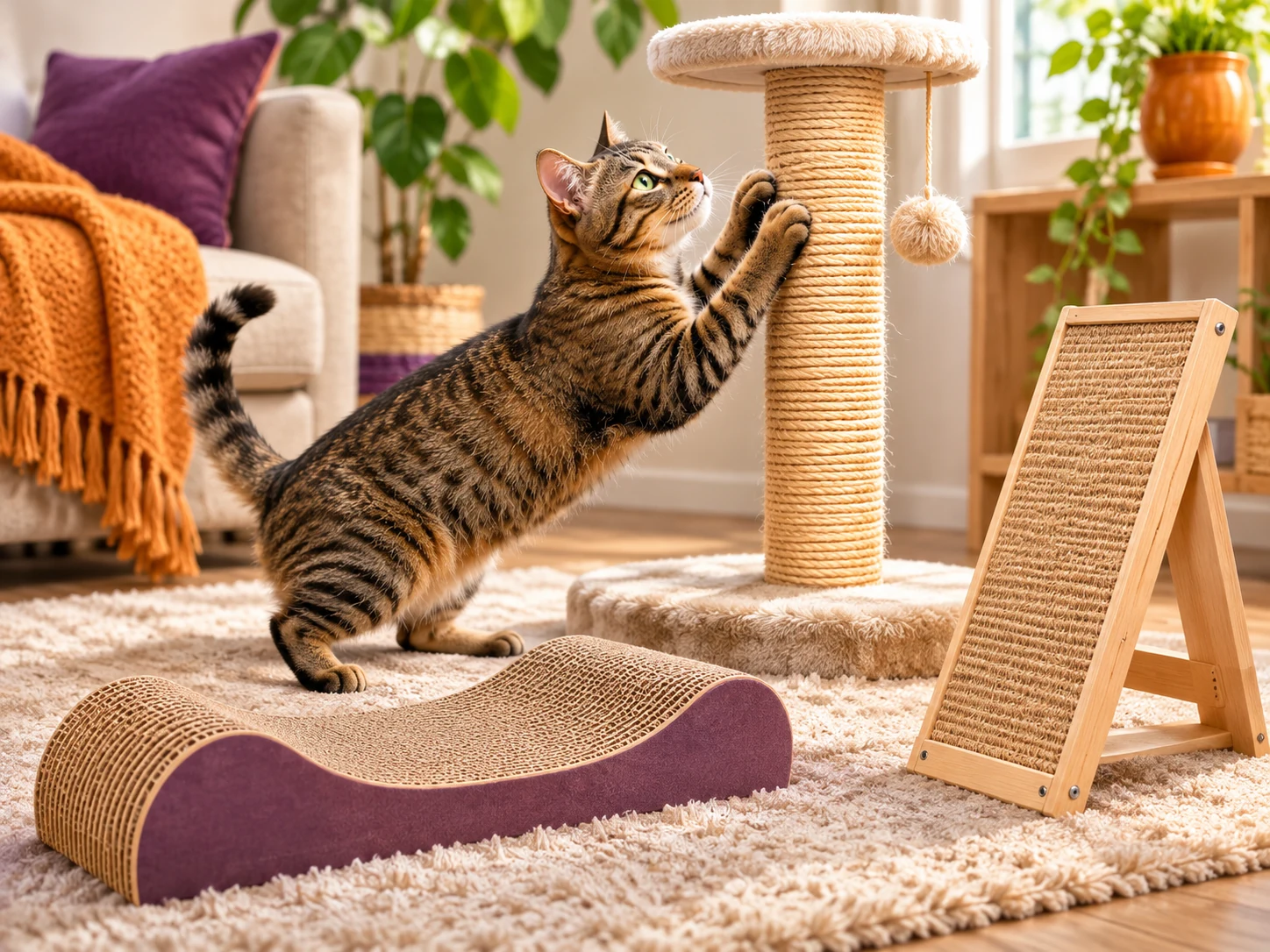
These observations can guide your choice of scratching equipment:
- Sisal structures: A useful option for cats that enjoy pulling their claws through a coarse, fibrous material.
- Corrugated cardboard boards: Suitable for animals that prefer working their claws across a flat or slightly inclined surface.
- Natural wooden scratchers: An alternative for cats attracted to firm surfaces with a natural texture.
- Carpet-style scratchers: Worth considering when a cat repeatedly chooses carpet-like materials.
- Angled scratching panels: Provide an intermediate position for cats that are not particularly interested in traditional upright posts or flat boards.
There is no universal design that appeals to every cat. Trying different constructions and materials can help you identify a more suitable option.
2. Position The New Scratcher Along Your Cat’s Usual Route
The location of scratching equipment can influence whether it becomes part of your cat’s daily routine. Instead of placing it wherever there is unused floor space, consider the areas your cat already visits regularly.
Useful locations may include:
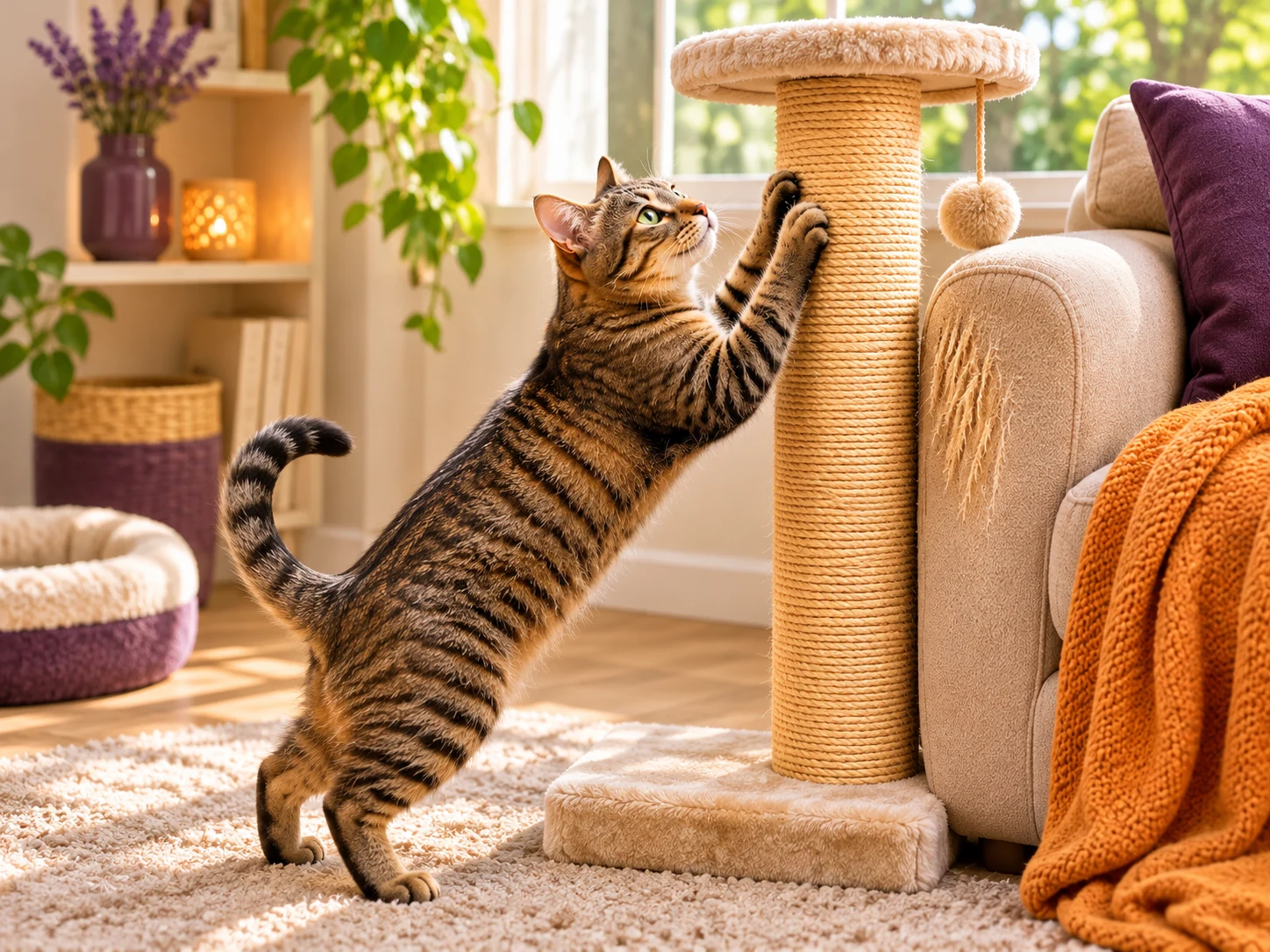
- Close to the sofa or chair that receives repeated claw marks.
- Beside a favorite sleeping area, where your cat often stretches after resting.
- Along familiar indoor pathways used throughout the day.
- In rooms where your cat regularly plays or spends time with family members.
For a cat that repeatedly targets one particular furniture corner, positioning a suitable scratcher directly beside that spot can provide an accessible alternative without disrupting its established routine.
After your cat becomes comfortable using the new surface, you can gradually adjust its position if you need to relocate it.
3. Turn The Scratching Area Into An Interesting Part Of The Home
A new scratching surface may take time to become familiar. Its appearance, texture, and surroundings can all influence whether your cat decides to investigate it.
You can introduce the equipment gradually by including it in activities your cat already enjoys.
- Move a favorite toy around the scratching area to encourage investigation.
- Place a small treat nearby when your cat shows interest in the new surface.
- Offer catnip if your cat is known to respond to it.
- Use calm verbal encouragement when your cat voluntarily approaches or uses the scratcher.
- Keep the surrounding space accessible so your cat can approach from a comfortable direction.
Give your cat control over the introduction process. Avoid moving its paws onto the equipment or trying to demonstrate the scratching movement physically. Allowing voluntary interaction can make the experience more comfortable.
4. Reduce Access To Vulnerable Furniture During The Transition
While your cat is becoming familiar with its new scratching area, temporary protection can help prevent additional damage.
Depending on the type of furniture, useful measures may include:
- Covering exposed sofa sections with a secure, washable furniture cover.
- Installing protective panels designed for the relevant furniture material.
- Using pet-appropriate adhesive protection products according to their instructions.
- Temporarily changing access to a damaged area when this can be done without restricting your cat’s essential space.
Always inspect protective products before use. Loose covers, exposed adhesive, or poorly secured materials may catch claws or create other hazards.
Furniture protection should accompany the introduction of suitable scratching equipment. Preventing access without providing another acceptable surface does not address your cat’s need to scratch.
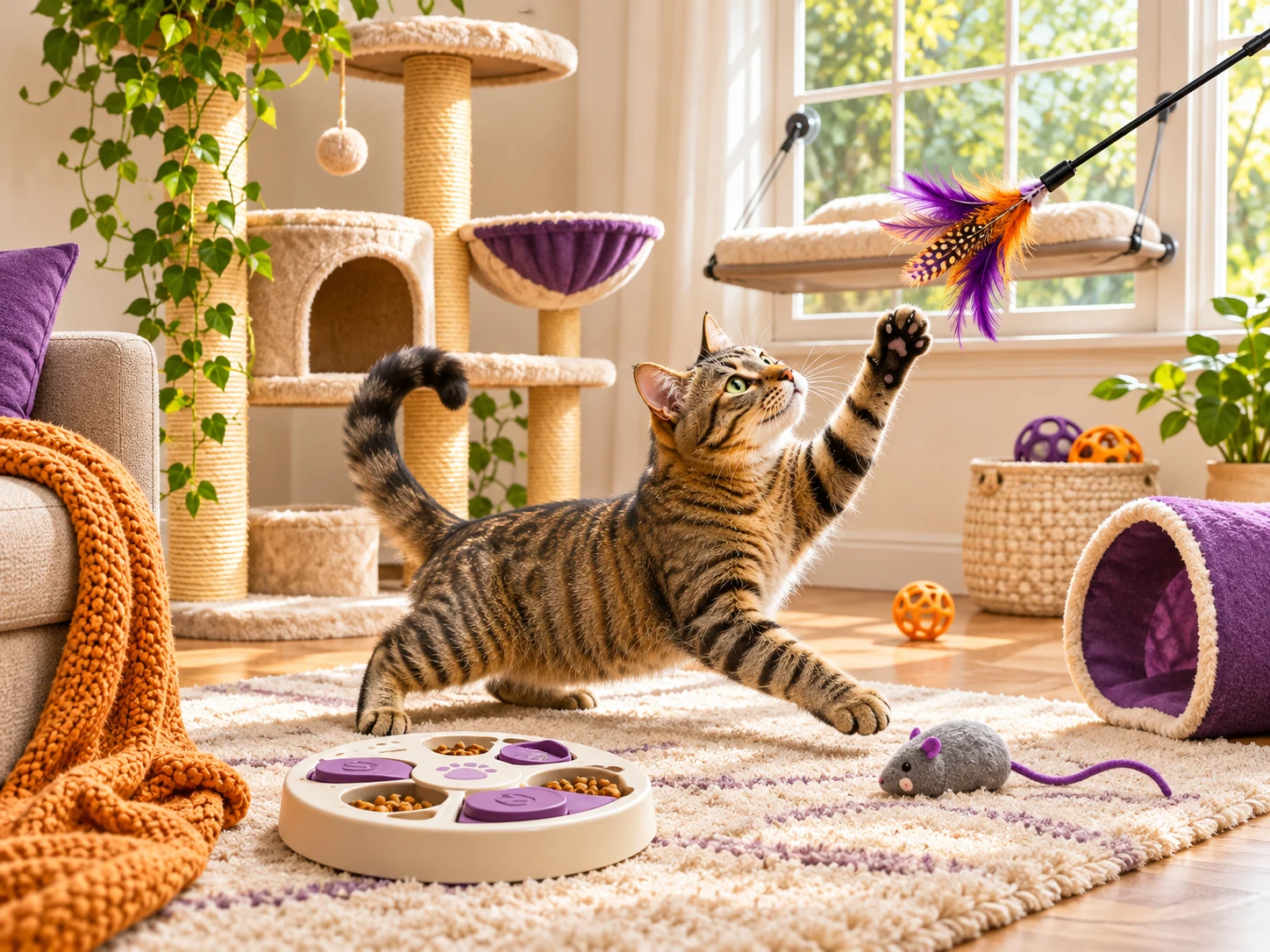
5. Give Your Cat More Opportunities To Stay Active Indoors
A comfortable indoor environment should provide more than food, water, and resting places. Cats also benefit from activities that allow them to investigate, climb, chase, and interact with their surroundings.
Consider including the following elements:
- Chasing toys: Interactive play encourages movement and allows cats to engage in natural hunting-related activities.
- Climbing furniture: Secure cat trees and elevated platforms offer additional opportunities for exploration.
- Safe observation points: Window perches allow indoor cats to watch activity outside.
- Food enrichment: Suitable puzzle feeders introduce mental challenges during feeding time.
- Separate scratching areas: Several accessible surfaces give cats more than one place to carry out their scratching routine.
These additions support an engaging home environment and complement the use of dedicated scratching equipment.
6. Associate Appropriate Scratching With Positive Experiences
When your cat independently chooses an approved scratching surface, respond with something it enjoys. A small food reward, friendly attention, or gentle praise can help make the experience pleasant.
Timing matters. Offer encouragement shortly after the desired behavior so your cat can associate the reward with its choice of scratching location.
Continue responding consistently while the new habit develops. Avoid frightening reactions or physical punishment when your cat returns to the sofa. Such responses can create negative associations without identifying a better place to scratch.
Which Scratching Surface Should You Choose For Your Cat?
Selecting suitable scratching equipment is easier when you consider the surfaces your cat already uses. The following comparison provides practical starting points based on common household scratching patterns.
| Observed Scratching Habit | Suggested Equipment | Reason for Considering It |
|---|---|---|
| Repeatedly targets sofa corners | Stable vertical sisal structure | Provides an upright surface for reaching and pulling. |
| Works claws across carpets | Flat cardboard scratching board | Offers a surface positioned close to the floor. |
| Reaches upward against curtains | Tall, securely supported scratcher | Provides additional vertical space for stretching. |
| Prefers firm wooden objects | Suitable wooden scratching panel | Introduces a firm surface with a different texture. |
| Alternates between several materials | Combination of horizontal and vertical scratchers | Provides different positions and textures to explore. |
Check the construction before placing any scratching product in your home. It should remain stable during use, have no exposed sharp components, and provide enough room for comfortable movement.
How Many Scratching Areas Should You Provide?
The number of scratching surfaces needed in a home depends on its layout, the number of cats, and the places where scratching naturally takes place.
For a single cat, having suitable scratching options in several frequently visited rooms can make them easier to access throughout the day.
In a multi-cat household, avoid relying on one shared scratching structure. Providing several accessible locations gives each animal additional opportunities to scratch without unnecessary competition.
It can also be helpful to offer different orientations. A cat may use a vertical post after waking up but prefer a horizontal board during another part of the day.
Can Trimming Your Cat’s Claws Protect Furniture?
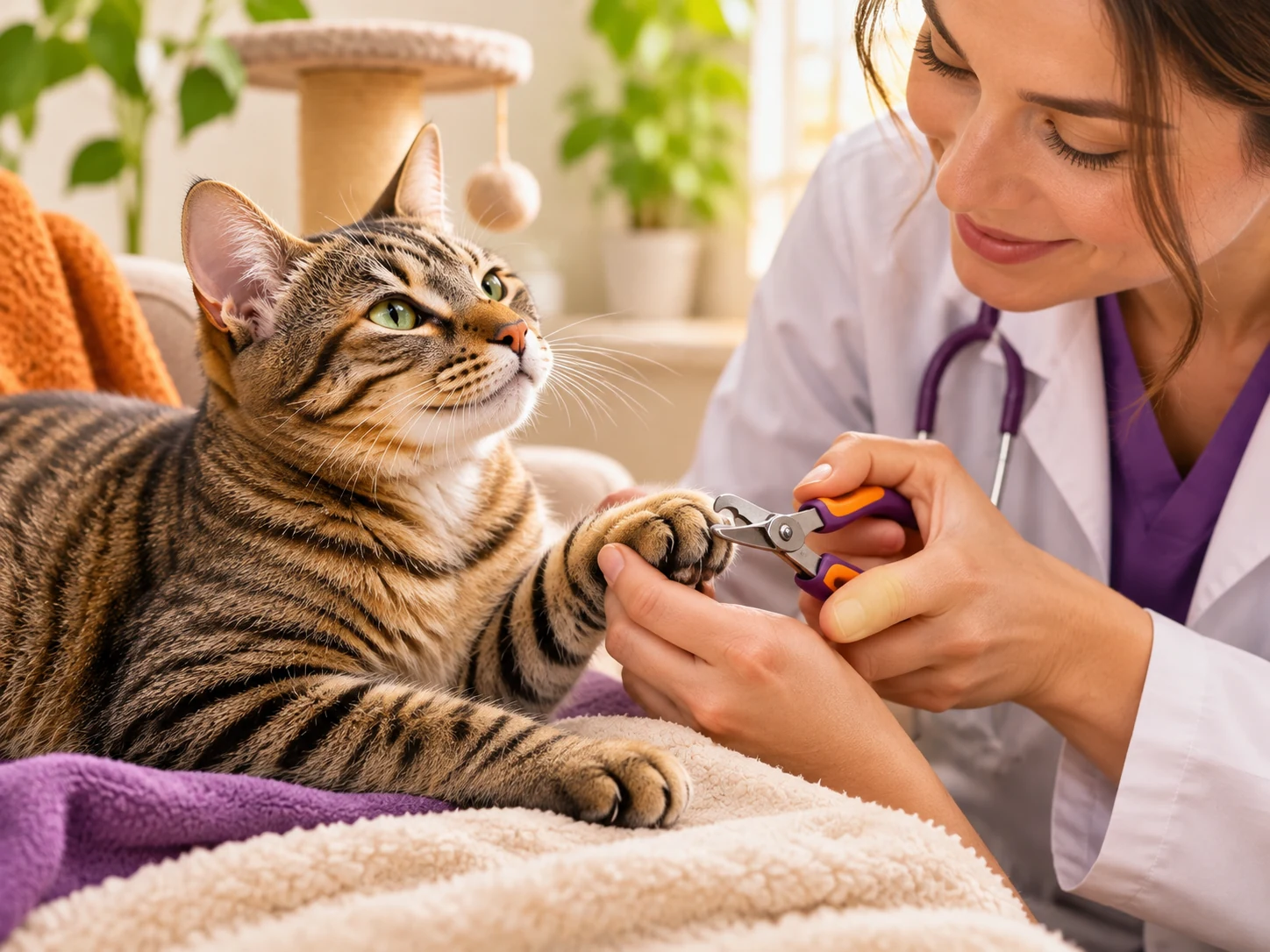
Routine claw care may reduce the sharpness of a cat’s nails and limit some types of furniture damage. However, trimming does not remove the behavioral reasons behind scratching.
Some cats require occasional nail maintenance, particularly when their claws become excessively long. Use appropriate feline nail clippers and take care not to cut the sensitive tissue inside the claw, known as the quick.
If you have not trimmed a cat’s claws before, ask a veterinary professional to demonstrate the correct method. This can help prevent accidental injury and make future nail care more comfortable.
Even when claw trimming is part of your cat’s grooming routine, suitable scratching surfaces remain an important environmental requirement.
Habits To Avoid When Managing Furniture Scratching
Furniture damage can be frustrating, but reacting harshly to scratching rarely provides a useful long-term solution. Cats need an acceptable way to perform this natural activity, and their environment should support that need.
Keep these points in mind:
- Avoid physical punishment: Hitting or handling a cat roughly can cause fear and undermine trust.
- Do not rely on frightening reactions: Shouting or sudden punishment may interrupt a behavior temporarily without teaching an appropriate alternative.
- Never force contact with a scratcher: Let your cat investigate unfamiliar equipment at its own pace.
- Keep appropriate scratching opportunities available: Removing every scratching surface leaves the underlying behavioral need unaddressed.
- Do not treat declawing as routine furniture protection: Declawing involves surgically removing the last bone of each affected toe. It is a serious procedure and should not be used as a routine response to normal scratching.
Consistent environmental management, suitable scratching equipment, and positive reinforcement offer a more welfare-conscious way to manage unwanted furniture scratching.
When Does A Change In Scratching Behavior Need Veterinary Attention?
Scratching furniture is usually a normal activity. However, an unexpected change in your cat’s behavior deserves attention, especially if it occurs alongside signs that suggest discomfort or a change in general well-being.
Speak with a veterinarian if you observe:
- A noticeable change in scratching frequency without an identifiable environmental cause.
- New patterns of hiding, unusual fear, or withdrawal from normal interactions.
- Discomfort when reaching, stretching, climbing, or using familiar scratching equipment.
- Changes in eating habits, energy, or everyday activity.
- Several unusual behaviors developing over a short period.
Older cats may need equipment that is easier to reach, such as low-profile horizontal boards. If mobility appears restricted or your cat avoids movements it previously performed comfortably, veterinary advice can help identify the cause.
A professional assessment is particularly useful when behavioral changes occur together with physical symptoms. It helps distinguish ordinary environmental preferences from problems that may require medical or behavioral support.
Frequently Asked Questions About Cats Scratching Furniture
Why does my cat repeatedly scratch one corner of the sofa?
Your cat may find that particular corner comfortable to reach, enjoy its material, or recognize scent signals left during previous scratching sessions. Consider introducing a suitable alternative close to the same location and rewarding voluntary use of the new surface.
Is it possible to stop a cat from scratching furniture entirely?
Completely eliminating scratching is not a realistic goal because cats need to perform this natural activity. A more suitable approach is to provide attractive scratching alternatives, protect vulnerable furniture, and encourage your cat to use designated surfaces.
Why does my cat continue scratching the sofa after I buy a scratching post?
The new equipment may not match your cat’s preferred texture, height, orientation, or location. Try observing which surfaces your cat chooses naturally and introduce an alternative with similar characteristics.
Are vertical scratching posts better than horizontal scratchers?
Neither design is automatically better for every cat. Some animals enjoy reaching upward against tall structures, while others prefer scratching close to the floor. Your cat’s existing habits are a useful guide when selecting equipment.
Do indoor cats need scratching surfaces?
Yes. Living indoors does not remove a cat’s need to maintain its claws, stretch, and communicate through scratching. Suitable scratching equipment should be part of a well-planned indoor environment.
Can catnip encourage a cat to use its scratching post?
Some cats respond to catnip by investigating nearby objects, which may help introduce a new scratching surface. Others show little interest in it. Catnip is an optional enrichment tool rather than a guaranteed way to change scratching habits.
Is punishing a cat an effective way to prevent sofa scratching?
Punishment does not teach a cat which alternative surface it should use and may create fear or stress. Providing suitable scratching equipment and rewarding appropriate choices is a more constructive approach.
Does declawing prevent furniture scratching?
Declawing surgically removes part of a cat’s toes and is not equivalent to trimming its claws. It is a serious procedure that should not be used as routine furniture protection. Appropriate scratching surfaces, environmental adjustments, and veterinary guidance are preferable ways to manage normal scratching behavior.
Final Thoughts: Create A Better Scratching Environment For Your Cat
Furniture scratching becomes easier to manage when you understand what your cat is looking for. The texture of a surface, its position within the home, and the opportunity to stretch comfortably can all influence where a cat chooses to scratch.
Begin by identifying the materials and positions your cat prefers. Introduce suitable alternatives in familiar locations, protect furniture that receives repeated attention, and use positive reinforcement when your cat explores an appropriate scratching area.
Every cat develops its own preferences, so finding a successful arrangement may require a little experimentation. Once the right combination of scratching surfaces and locations is available, your cat has more opportunities to express natural behavior without relying on household furniture.
Understanding scratching is one part of providing a healthy and comfortable life for your pet. Explore our Complete Cat Care Guide for more information about everyday feline care, grooming, behavior, nutrition, and well-being.
References
- Cornell University College of Veterinary Medicine: Feline Behavior Problems – Destructive Behavior.
- American Society for the Prevention of Cruelty to Animals (ASPCA): Destructive Scratching.
- RSPCA Australia: Why Does My Cat Scratch the Furniture?.
- Feline Veterinary Medical Association: Positive Reinforcement Training Educational Toolkit.
Disclaimer: This article is provided for general educational purposes and does not replace professional veterinary advice, diagnosis, or treatment. If your cat develops unexpected behavioral changes or signs of physical discomfort, consult a qualified veterinarian.